

The Magazine
👩💻 Welcome to OPIT’s blog! You will find relevant news on the education and computer science industry.
Search inside The Magazine


Are you considering returning to study to deepen your fundamental understanding of essential emerging technologies such as artificial intelligence (AI), data science, and cybersecurity? But at the same time, are you unsure about the kind of impact this might have on your career prospects and whether it is worth the investment?
Open Institute of Technology (OPIT) student Paulo Mota was in a similar situation. To assist others in choosing the best path forward, he shares his experience as a professional who decided to enroll at OPIT to deepen his understanding of AI. Paulo explains how he was able to immediately apply his new learning in his current role to enhance his impact.
The Challenge
Paulo is a data engineer with Brazilian roots who has been working in the Netherlands for the past five years. He increasingly saw the potential applications of AI to enhance projects in his current position at Coolblue and had a desire to move in that direction. But he was unclear how to set aside the time to study the subject without putting his career progression on hold. This was his biggest barrier in deciding how to move forward.
The Solution
Paulo investigated a number of study opportunities and settled on OPIT. While recognizing that it may not be the most prominent institute in the field, the curriculum of the MSc in Responsible AI was exactly what he was looking for. It combines building technical expertise with a focus on real-world applications, and it is taught not just by professors but also by professionals in the field currently leading the expansion of AI applications.
In addition to this, the degree is flexible and delivered fully remote, allowing Paulo to study without taking a career break. This also had the added benefit that he could apply what he learned on the job, so he did not have to wait to complete the course to start to see the benefits.
Paulo also highlighted that the degree’s EU certification was a bonus for someone with Brazilian roots building a career in the European market.
The Results
Paulo says that so far, his OPIT degree has been a highly worthwhile investment. He has already started to become more involved with projects at his current place of work, using AI to improve how the data analytics team works, improving the speed and impact of their work.
For his final capstone project, Paulo is working on a live challenge in his workplace, enhancing the real-world experience he gains as part of the course and bringing genuine value to his company in the process.
The course has also prepared Paulo for a variety of professional certifications in AI that enhance his CV and improve his competitive edge in the work landscape. While students must still apply to the professional issuing agencies and take tests, OPIT’s courses prepare students to fulfill these requirements with ease.
Other Success Stories
Paulo is one of several recent success stories to come out of OPIT from working professionals who have leveraged their new learning to enhance their impact in their current positions.
For instance, Rinaldo Festa recently shared a similar experience completing OPIT’s BSc in Modern Computer Science while continuing to work full-time as the Chief Technology Officer at Cosmico. He wanted to improve his ability to balance innovation with practical application so that he could perform better in his current job and not interrupt his career. Like Paulo, his course of study had immediate applications, and he was able to work on more transformational projects.
Silvia Garavaglia was in a similar position, working as a project manager on complex projects that increasingly involved big data and AI, but she felt that her lack of technical expertise was holding her back from doing more. She chose OPIT’s MSc in Applied Data Science and AI, again because it married flexibility with a curriculum built around practical applications. This allowed her to rethink her role and create new opportunities for herself within her career.
OPIT’s MSc in Responsible AI
OPIT’s MSc in Responsible Artificial Intelligence is a forward-thinking program designed to cultivate a new generation of AI professionals who are not only technically proficient but also deeply conscious of the ethical and societal implications of their work.
It is a full, comprehensive, EU-accredited Master’s program that typically lasts between 24 months. Both tracks cover the same content, so your choice depends on the time you have to commit. It offers a unique blend of foundational AI concepts and advanced applications, all viewed through a critical lens of responsibility.
The curriculum is meticulously structured to cover both the theoretical underpinnings and practical applications of AI. Core modules include an “Introduction to AI and Ethics,” which sets the stage for the program’s unique focus, alongside essential subjects like “Data Analytics and Visualization,” “Human-Centered AI Design,” and “Programming for AI.” As the program progresses, students delve into more advanced topics such as “Machine Learning,” “Natural Language Processing,” “Computer Vision,” “Computing Architectures for AI,” and specialized applications in “AI for IoT and Automation” and “AI in Business, Strategy, and Entrepreneurship.”
A key expectation of the program is its emphasis on progressive assessment rather than traditional final exams. Students are evaluated through a variety of methods, including programming exercises, collaborative group projects, development of websites or applications, essays, and quizzes. This diverse assessment approach ensures a holistic understanding and application of the material.
The program’s tight course structure is followed by final terms dedicated to a thesis or a capstone project, which can often be integrated with an internship. In the case of those continuing to work, it integrates real-world challenges into their current role.
Graduates emerge from the program as highly versatile AI professionals uniquely positioned to develop AI applications, models, and software responsibly, integrating ethical considerations into every stage of the AI lifecycle. This specialized skill set opens doors to a wide array of career opportunities in a rapidly evolving job market.

The Open Institute of Technology (OPIT) is a new concept in higher education that aims to equip people for a fast-changing work landscape characterized by rapidly evolving technology. This goes beyond deep training in trending technologies such as artificial intelligence (AI) and cybersecurity to reframing our approach to work and how we envision the future of work.
As part of that ongoing discussion, Stefania Tabi from OPIT Career Services sat down with Matteo Roversi, Co-Founder and Chief Community Officer at Cosmico, to talk about how we need to reframe our approach to work to thrive in the future workplace.
Founded in 2020, Cosmico is an Italian-based talent platform that uses AI-powered technology to connect talent – currently a pool of more than 27,000 independent professionals – with the businesses that need them, including many of Europe’s biggest companies. The platform uses AI for talent screening, matching, and recommendations, as well as to assess coding skills. This can reduce the time from request to screening, interview, proposal, and kick-off to between 24 and 72 hours, letting businesses move faster.
New Rules
Matteo started by discussing the aspects of the work landscape that have fundamentally changed over the last decade, and how this is forcing us to reframe our approach to standing out in the workplace.
CV to Reputation
He explained that while for many potential employees, the main concern used to be populating your CV with the relevant skills and experience to land your next job, that is becoming increasingly meaningless. AI can be used to tailor your CV exactly to what a job description wants, bearing in mind that the description was probably also written by AI and will be assessed by AI. As a result, matching CVs to job descriptions has become an increasingly unreliable way to find desirable candidates.
This has shifted the focus to reputation, as it is increasingly important that people are familiar with your work and know people who can recommend you to get your foot in the door.
Execution to Agency
It used to be that your objective was fulfilling the tasks on a job description, which required intelligence and experience, but not necessarily a significant amount of self-direction. That is changing as new ways of solving problems continue to emerge. Today, businesses want employees who have agency and take the initiative to solve problems. In a way, today, everyone needs the self-starter mindset of an entrepreneur.
Specialization to Deep Generalism
In recent years, the work landscape has been about specialization in specific fields and technologies. But Matteo explained how that focus is disappearing. Technology is moving so quickly that specialist software, coding languages, and algorithms are becoming obsolete, or the work previously required is being automated through AI.
Therefore, today, instead of a focused specialization, applicants need deep generalism, with not only a broad understanding of the technological landscape but a deep understanding of how technology can be leveraged to connect different fields of work, solve problems, and judge decisions.
Hours to Progression
The trend of moving away from paying for hours worked to the product being delivered will only become more pronounced, Matteo explained. Things that once took hours can now be delivered within minutes, but that doesn’t necessarily diminish the value of that delivery.
He explained how we need to think of ourselves as mind athletes. For instance, a sprinter may compete for a little over 10 seconds in their principal race, but they spend vast amounts of time in deep training. This is what professionals must do now: invest in their knowledge base so that they can deliver. As an extension of this, just like athletes, professionals need to focus on recovery. No one is a machine, and we cannot be delivering constantly.
Compete to Create
Matteo explained how the workplace mindset has long been one of competition, with talent competing for a finite number of jobs. But as jobs disappear and emerge rapidly, the field of competition changes significantly, and the market no longer feels finite. He also suggested that the best way to find the job that you want is to create it, rather than wait for someone else to make it for you (and then compete for it).
Taking Charge of Your Career
Having looked in detail at how the work landscape is changing, Matteo then shifted gears and shared his best advice for creating the job that you want.
Shift to AI Mode
He started by pointing out that you need to leverage the available technology to stay competitive, especially AI. But you have to do this in a way that increases your productivity and enhances the value of your contribution. He suggests that people embrace and test technologies and automate where possible by delegating. But delegating should go beyond simple tasks to orchestrating processes. When this is in place, you can reshape your vision of your contribution by identifying what you do that machines cannot replicate.
Build Your Work Stack
Once you have identified your value, Matteo explains how to reform what you offer. Start by thinking of yourself as a company rather than a job description. Don’t tell people what you do, but tell them the problems that you solve. Once this is in place, you can build your presence and your audience by making yourself accessible, both online and offline. This helps you grow your network by actively seeking mentors and peers.
Write Daily, Ship Weekly, Share Always
Matteo emphasized that work must be public to build your reputation, an important factor already discussed in his review of the work landscape. To this end, he suggests writing daily, which means spending at least 15 minutes a day focused on your problem. This should result in something you can “ship” every week to maintain your visibility, and always share to build your profile.
Level Up Your Purpose
Matteo agreed with the advice that to thrive in your work, you need to have purpose, but also agreed with the suggestion that people who say to follow your passion are usually already rich and have a safety net in place for failure. He suggested that your purpose changes according to your circumstances and that you should aim to cycle through these different phases.
- Survival – When you need to pay your bills, you need to find clients and sell your work
- Status – Once you have a stable base, you can focus on gaining recognition for your work and attracting clients to you
- Creativity – While many people stop at the status phase, this is the moment to stretch yourself and push out of your comfort zone to do something new
- Contribution – This is the ultimate phase when you can scale up the impact of your work
Preparing for the Future of Work With OPIT
One theme that came through clearly in Matteo’s discussion was the importance of investing in yourself. This is because you are no longer simply being asked to fulfill a job description; you need to frame yourself as a problem-solver who adds value. In today’s work landscape, this means understanding tech trends and their impact on the business landscape. Making that leap can start with OPIT. We offer bachelor’s courses for those looking to build a strong technical foundation and master’s courses for professionals looking to reframe their value proposition.
Discover OPIT’s accessible and fit-for-purpose programs today.

The Open Institute of Technology (OPIT) was developed not only to create dynamic technology-focused courses that evolve with real-world tech development, offering flexible degrees that allow professionals to expand their horizons without interrupting their careers. But what does that look like in practice?
Rinaldo Festa recently shared his experience completing OPIT’s BSc in Modern Computer Science while working as the Chief Technology Officer at Cosmico. He explained why he chose to further his studies, his experience at OPIT, and how it has affected his career.
Meet Rinaldo Festa
Rinaldo describes himself as a results-oriented engineering leader with a journey from military services to a successful startup exit. His experience bridges the gap between product and engineering by driving technical strategy and mentoring high-performing teams.
He is now the CTO at Cosmico, an Italian firm that specializes in matching digital talent with companies. This allows businesses to access the most experienced workers for projects as needed and expanding the horizons of digital experts working remotely. They currently have a team of over 27,000 experienced professionals with expertise in areas such as design, coding, data, AI, and cybersecurity. They have worked on major projects for major organizations such as Accenture and Huawei, as well as startups such as Scalapay and Unguess.
The Challenge
While Rinaldo could certainly characterize his career as successful, he felt the need to balance innovation with practical application, ensuring he could not only lead a team but also not lose touch with the technical elements. This led Rinaldo to ask himself: “Am I truly staying ahead, or merely keeping up?”
A curious professional with a growth mindset, Rinaldo was not looking for a new job, but he did want greater clarity. He wanted to better understand the fundamentals of the technologies that are driving advancement and transformation, such as artificial intelligence (AI), big data, and cybersecurity. He also wanted to deepen his understanding of the strategic application of these technologies and also dive deeper into essential questions such as the ethics of AI.
This led Rinaldo to search for a path forward that wouldn’t interrupt his career but would rather expand his horizons. Enter OPIT, offering flexible courses that you can complete remotely on your own schedule. These courses maintain a dynamic structure and actively keep pace with the latest technological developments, rather than following a limited approved curriculum. Another factor that attracted Rinaldo to OPIT was the faculty, working professionals who lead in their industries and actively teach and share their experience of current, real-world challenges and applications.
Studying at OPIT
Once he started his course, Rinaldo quickly realized that he had made the right decision. While embracing the opportunity to be a student again and acknowledging that he had much to learn, he also appreciated how OPIT respected and valued his experience, while also challenging his assumptions and helping him to grow. He quickly realized that OPIT’s courses are “designed for people like me.”
Rinaldo also shared that he was pleasantly surprised by how fast the theories he learnt became practical knowledge and then actionable insight that he could apply in his professional life. New methods, tools, and mental models were immediately useful in team reviews, architecture choices, and product strategies.
Professional Transformation
While Rinaldo is still enrolled, his studies at OPIT have already had a transformative impact on his professional life. Continuing his role as Chief Technology Officer at Cosmico, he has a new vision, enabling him to work on new transformational projects.
Rinaldo now focuses on developing AI-driven solutions for the future of talent management. For example, while many already use AI to read CVs and resumes to identify qualified potential candidates, Rinaldo leverages AI to do much more. New AI agents are capable of context-aware skill extraction, not only identify keywords linked with certain skills but also understanding the context behind each skill listed in a CV.
The team at Cosmico also now committed to creating responsible AI tools that are fit for purpose, not just producing tools with the popular AI-powered label. A major part of this is education before implementation. According to Rinaldo:
“Let’s face it: most people who discuss AI don’t understand what they’re talking about. They confuse basic machine learning with agentic AI. They implement ‘AI solutions’ that are nothing more than glorified ‘if/then’ statements. This is only ineffective; it is dangerous.”
Cosmico is building programs to demystify AI concepts and create a common language about capabilities and limitations.
This is how Rinaldo is leading from the front, made possible by his time studying at OPIT. Rather than a career shift, he achieved a mindset shift that is helping him to be more strategic, aligned, and aware.
OPIT Programs
OPIT is now offering a range of programs that can help professionals upskill, develop a better understanding of the technologies that are transforming the way we live and work, and take a more strategic approach to their application and implementation.
While Rinaldo chose OPIT’s BSc, there are also many other MSc programs open to people with a bachelor’s in any subject; it does not need to be technical.
The MSc in Digital Business and Innovation empowers professionals to drive innovation in both established companies and digital-native contexts by leveraging the power of digital technologies and AI.
With strong emphasis on real-world applications in areas such as natural language processing, computer vision, business, sensor systems, and industry automation, the MSc in Responsible Artificial Intelligence combines technical expertise with a focus on the ethical implications of modern AI.
The MSc in Enterprise Cybersecurity integrates technical and managerial expertise, equipping students with the skills to fulfill the market’s need for versatile professionals capable of implementing security solutions and leading cybersecurity initiatives.
Meanwhile, the MSc in Applied Data Science and AI equips students to work at the intersection of management and tech and solve real-life business problems using data science and AI.
Not sure which course is right for you? Chat to OPIT’s Career Services team for advice.

Are you considering broadening your field of expertise in key areas such as artificial intelligence (AI), data analytics, and cybersecurity in an effort to be more prepared for the current and future workplace?
The Open Institute of Technology (OPIT) offers both BSc and MSc degrees in areas such as Modern Computer Science, Digital Innovation, Applied AI, and Data Science that are designed to be dynamic and practical, constantly responding to advances in the field. And all OPIT courses are fully remote, attracting students from around the globe and providing asynchronous learning opportunities. This creates a flexibility that allows you to coordinate your studies around your other commitments, whether that be a challenging job or a busy family. So you can study when it’s convenient for you.
But what is it truly like to study online? Lucas Tecchio, head of Digital Content Creation at OPIT, recently took us on a deep dive into how OPIT’s courses are designed and delivered to help you understand what to expect from earning an OPIT degree.
Synchronous vs. Asynchronous Learning
Tecchio explained that OPIT’s courses combine synchronous and asynchronous content elements to create a dynamic learning environment that is both flexible and keeps students on track.
There are live sessions with professors, as well as content that is released in weekly modules to maintain the pace of the course. This is paired with videos, readings, practice tasks, and discussion forums that can be accessed at any time based on module release. Recordings of live sessions are also made available, so you don’t miss anything.
PERES Methodology
All OPIT course content is designed according to the PERES Methodology to optimize quality and engagement. Tecchio explained that the PERES Methodology means:
- Practicality – All theoretical concepts are reinforced with practical application
- Elegance – Learning material is well-presented for enhanced engagement and clarity
- Rigor – Content is academically rigorous
- Energy – Course content is delivered with an energy that keeps students engaged
- Simplicity – Materials are designed to make content accessible
Online Portal
All OPIT’s courses are delivered through its online portal called Canvas, where all course material can also be accessed.
According to Tecchio, when you log in, you can access all the individual courses that make up your program. You can also receive a general overview of your current stage in the program and what you need to do for all your courses, thanks to calendar and to-do list options.
When you select individual courses, you will see live weekly modules with links to the relevant content, including live sessions, videos, reading materials, and more.
Canvas is a self-contained and highly navigable portal that helps you stay organized and on track.
Competence-Based Learning and Progressive Assessment
Tecchio explained that OPIT’s courses are designed to teach both theory and competency, ensuring you can put what you have learned into practice. In the case of MSc courses, this culminates with the Capstone Project, which lets you apply everything you have learned to real business challenges.
In fact, every stage of the course follows the same philosophy – you will find yourself conducting practice tasks, performing live coding, and analyzing real study cases.
This philosophy carries through to assessment, which is progressive, rather than based on final exams and projects. This ensures that you are on track throughout the course, rather than left struggling at the end of the course.
For example, if you take the web development course, your main task will be to develop a website or app, and there are three stages to the project. By week four, you’ll be required to produce a prototype for your project. By week eight, you will produce a working version, and by the end of the course, you will have a fully tested and optimized version. These types of assessments can be done individually or as a group project, reflecting real workplace dynamics.
Professional Certifications
Many courses prepare you for professional certifications that are desired by many workplaces. Tecchio explained that while you still need to be tested and apply for the official certification, OPIT will fully prepare you to pass the testing without additional study.
You can receive professional certification in:
- Computer networks: CompTIA Network+
- Project management and quality assurance: Prince2Foundation, CAPM
- Cloud computing infrastructure: AWS Cloud Practitioner Essentials
- Network security and intrusion detection: CISSP
- AI-Driven forensic analytics in cybersecurity: GCFA
Student Support System
While studying online can sometimes feel like an isolated journey, Tecchio explained that OPIT does everything it can to build a dynamic community where you can receive significant student support to keep you connected and on track.
There are four main sources of student support.
The program coordinator helps with administrative issues. They handle onboarding, assist with the learning platform, organize additional events, and have virtual office hours that you can take advantage of whenever you need support.
Our team of 50+ academic and professional tutors not only delivers live lectures but is also an accessible source of knowledge and guidance. The faculty is a mix of experienced professors and active professionals who are leaders in their field and possess active real-world experience they can share with students. The faculty includes leaders like Zorina Alliata, Principal AI and Generative AI Strategist at Amazon, and Sylvester Kaczmarek, a former AI expert at NASA and WeSpace.
The Career Services team can assist with the transition from study to the workplace. The team delivers career coaching, organizes masterclasses with industry experts, and facilitates internship opportunities.
OPIT AI Copilot
This support team is now joined by OPIT AI Copilot, an AI agent that is specifically designed to be a personal learning companion. Unlike most generative AI agents, OPIT AI Copilot is trained on OPIT’s extensive range of learning materials, so it is highly fit for purpose. It also knows where students currently are in their course and can focus on the competencies that they are on track to master.
You can use OPIT AI Copilot to get immediate answers to questions based on OPIT’s course materials. It can also help students locate relevant resources, summarize the key takeaways from lectures to facilitate revision. Additionally, it can create practice tests based on the course materials, and prepare students for assessments through simulations.
OPIT Degrees
Online learning is often perceived as a lesser substitute for live learning experiences. But OPIT has superseded this by designing a dynamic online, asynchronous learning environment that promotes personalized education that works for individual students based on their lifestyle, time commitments, and learning style. It is not a substitute, but a new way of learning that represents the future of education.
Learn more about OPIT’s programs and courses and whether OPIT might be the right learning option for you.

The Open Institute of Technology (OPIT) is a dynamic new university that provides practical learning opportunities for people looking to thrive in a dynamic, tech-driven workplace. It offers bachelor’s courses for those at the start of their journey and master’s courses for professionals hoping to expand their horizons. This includes students like Silvia Garavaglia.
We recently spoke to Silvia about her experience studying with OPIT. She shared how her professional interests led her to OPIT and how her studies have led her to a new and unanticipated career path in artificial intelligence (AI).
Understanding the Data
Until recently, Silvia Garavaglia worked as a project manager, leading complex assignments across a variety of European firms. Silvia shared that she was increasingly working on data-driven initiatives and learned the value that big data, combined with AI, could deliver in business. However, she felt that she was just scratching the surface of what AI-enhanced data analysis could do and that her lack of experience on the technical side was holding her back from doing more with it.
In short, Silvia found herself wanting to move from just managing and leveraging data to truly understanding how the technology works under the hood. She knew that she would have to find educational resources to support this journey.
Finding a Learning Partner
Silvia’s professional goals motivated her to start looking for a learning partner. But this was a challenge for a number of reasons. First, she needed a flexible program compatible with her busy work life. Many of the courses she found weren’t flexible enough in their availability to fit into her schedule. Second, many relevant programs demand a strong technical background for master-level courses.
From her on-the-job experience, Silvia knew that she wanted a course that combined technical skills development with teaching strategic approaches that focus on application. She knew that the things she wanted to achieve would require a combination of the two.
OPIT’s MSc in Applied Data Science & AI
After much research, Silvia chose OPIT’s MSc in Applied Data Science & AI, which is designed to prepare students to occupy the intersection between management and tech. A master’s course designed for professionals with varied backgrounds, the program combines technical courses on data science, machine learning, and artificial intelligence with courses on business management and problem-solving.
What students learn in their dynamic online classroom is then applied to real-life business challenges that can be addressed using data science and AI. These solutions are taught by a faculty who are not just teachers, but active professionals working at the cutting edge of their fields.
The course also includes an internship or a capstone project that sees students apply their learning to new challenges, turning theory into experience.
Silvia said that she chose OPIT due to its practical content and human-centered approach. This set it apart from other academic programs because it was a course “built by people who build.”
She knew she had made the right decision when she started the onboarding process, which she described as responsive, transparent, and unexpectedly personal.
Learning That Changed Everything
While Silvia has always considered herself an eternal student, interested in always learning and growing, she said that the course changed her perspective. While she may have started out simply looking for knowledge to help her do her job better, what she learned made her completely rethink her role. She began to see new possibilities for her career, creating opportunities rather than fitting into cookie-cutter roles.
Silvia explained that she went from seeing herself as someone who supports tech teams to someone who creates technological solutions that solve real-world problems. She was no longer playing catch-up with her tech team; she was ready to create while following her own path forward.
A New Path
Silvia is currently interning at Midnight Ventures, an engineering company that develops cutting-edge AI agents that solve real business problems with intelligent automation and multi-agent systems.
She is working on a medical AI diagnostics platform for aesthetic medicine that analyzes ultrasounds in real time, identifying dermal fillers and skin conditions with medical precision, enhancing diagnostic capabilities. Silvia said this project appealed because of its focus on leveraging technology to solve human problems, supporting doctors to better serve their patients.
Among other things, Midnight Ventures is also working on a platform to democratize access to algorithmic trading by converting natural language trading strategies into executable code.
All of OPIT’s master’s courses include a final capstone project that lets students apply their learning to real-world challenges that inspire them. For her Capstone project, Silvia is working with HYPE, a financial services firm in Milan, on an AI-powered onboarding agent that combines technology with crafting the best possible human experience.
An Exciting Future
Overall, Silvia says that she is excited for the future. She is on the path to becoming an AI developer, learning to code step by step, while leading real projects that leverage AI to solve human challenges.
Others looking to do the same might also consider OPIT as a gateway to a new path forward. OPIT’s MSc in Applied Data Science and AI is a great place to start.
OPIT Master’s Courses
OPIT also offers an MSc in Digital Business and Innovation for professionals who want to drive innovation and lead digital entrepreneurship with a focus on growth hacking, digital transformation, and leveraging AI to drive innovation.
The MSc in Responsible AI also combines technical expertise with real-world applications, with a focus on the ethical implications of modern AI and the architecture of sustainable AI systems.
OPIT’s MSc in Enterprise Cybersecurity is focused on digital security solutions, but also focuses on combining the technical and managerial sides to bridge the gap between coding and application.
Contact Career Services to see how OPIT can support you on your journey toward your professional goals.

Artificial Intelligence (AI) is having a profound impact on every aspect of our lives, and education is no exception. But leveraging AI to produce better learning outcomes requires intelligent strategies directed by experienced educational professionals. This is what the Open Institute of Technology (OPIT) is working to achieve with its new OPIT AI Copilot.
OPIT is a pioneering global online university that delivers accessible and flexible courses designed to prepare people for future careers in which technology is constantly improving and evolving. And OPIT AI Copilot is now part of this, helping students manage their course load and personalize their learning, while teaching AI applications in practice.
OPIT’s Vision
OPIT was founded to fill a gap in the education market, as traditional university courses struggle to keep pace with fast-changing technology. It builds its curriculum around current cutting-edge technology and staffs its faculty with experts who are not just teachers but also active, leading professionals in the field of artificial intelligence. This is in addition to courses that combine theory with practical application.
OPIT also believes that education should be accessible for all. Their flexible online approach means that busy professionals can study while continuing their careers, and everyone can access quality education no matter where they are in the world. OPIT serves more than 350 students from 80 countries, including emerging nations like Nigeria, Ghana, and Kenya.
OPIT AI Copilot is part of this vision. The groundbreaking AI agent acts as a personal tutor, available 24/7, bridging time zones and providing real-time support. The agent also can personalize how it delivers content, adapting it based on the needs of the student, including their preferred learning style, pre-existing knowledge, learning pace, preferred language, and more. This is a major step toward overcoming the issue of the prevalent “one-size-fits-all” approach to education, which may be practical for teaching large groups but is an ineffective approach to learning.
Training and Development
The effectiveness of education AI agents depends on the quality and breadth of their training material. OPIT AI Copilot stands out for being trained on OPIT’s entire education archive. This includes 3,500 hours of video content from 131 courses, plus 3,000 proprietary documents, including 320 certified assessments.
Developed by an in-house team of dedicated faculty, engineers, and researchers, the OPIT AI Copilot is one of the first deeply integrated AI systems of its kind in a European institution. In-house development ensures that the AI agent is aligned with OPIT’s educational philosophy and approaches.
Capabilities and Features
OPIT AI Copilot is designed to be a dynamic and multi-faceted assistant with a wide range of functionality. Principal among them are:
- Personalized Learning Support: OPIT AI Copilot provides real-time, personalized guidance that adapts to a student’s progress. It can link directly to relevant sources within the virtual learning environment and adjust its support based on where the student is in their course modules. It avoids revealing information from unreleased modules, ensuring a structured and integrated learning experience.
- Contextual Assistance: As well as drawing from existing material, OPIT AI Copilot can generate content to deepen the learning experience, such as code samples and practice exams. It can also answer questions posed by the student, with responses grounded in the official course materials.
- Academic Integrity during Exams: During examinations, OPIT AI Copilot automatically shifts into “anti-cheating mode,” during which it restricts direct answers on exam topics and functions solely as a basic research tool, promoting self-driven learning and ensuring academic integrity.
- 24/7 Availability: The AI assistant operates and interacts continuously, providing round-the-clock support, which is invaluable for students across different time zones.
Benefits for Students: Enhanced Learning and Support
Having access to OPIT’s AI Copilot as a dedicated learning assistant has various benefits for students engaged in one of OPIT’s courses:
- Personalized Learning Journey: Students receive tailored support that adapts to their individual pace and learning style.
- Instant Access to Information: Immediate feedback promotes faster learning and boosts motivation, leading students to achieve better learning results.
- Improved Study Habits: Features like exam simulations and the ability to download summaries and concept maps empower students to study more effectively.
- Flexibility for Working Professionals: 24/7 availability and adaptive learning modes are particularly beneficial for students juggling study around other commitments such as work and family.
Benefits for Teachers and Faculty
While we often focus on the benefit for students, OPIT AI Copilot also benefits teachers and faculty to do their jobs better.
- Automated Grading: Automated grading of multiple-choice and single-answer exams lets students get their results immediately. The agent can also provide preliminary grades on longer written exams, assessing structure and grammar, and checking for the inclusion of key concepts. This again gives students immediate feedback while waiting for final marks and gives teachers an unbiased guide to help them verify that they are grading fairly.
- Generation of Learning Materials: Teachers can leverage OPIT AI Copilot to generate new learning materials, quizzes, and feedback rubrics, based on the core materials that they have prepared and gathered. They can also use the tool to find related new publications and materials for review and possible inclusion in the course. This saves teachers time as they expand and refine their curriculum materials.
- Scalability: The AI system allows OPIT to scale its educational offerings and support services more effectively, accommodating a growing international student body without a proportional increase in human resources.
- Pioneering Educational Technology: By integrating such an advanced AI system, OPIT positions itself as a leader in educational technology, attracting students and faculty who are keen on innovation and future-proof learning models.
OPIT AI Copilot currently saves teachers up to 30% of their time, allowing them and other faculty to focus on activities such as personalized instruction, one-on-one mentorship, refining teaching methodologies, fostering deeper student engagement, and exploring innovative pedagogical approaches.
The Future of Education With OPIT AI Copilot
The launch of OPIT AI Copilot, unveiled at Microsoft’s “AI Agents and the Future of Higher Education” event in Milan, marked a significant milestone in online education. As Professor Francesco Profumo, Rector of OPIT and former Italian Minister of Education, aptly put it, “AI is no longer just a tool: it’s an environment, a context that radically changes how we learn, teach, and create.” He emphasized that while AI offers immense potential, it also presents a cultural, ethical, and pedagogical challenge that requires courage to rethink traditional models and build solid bridges between human and artificial intelligence.
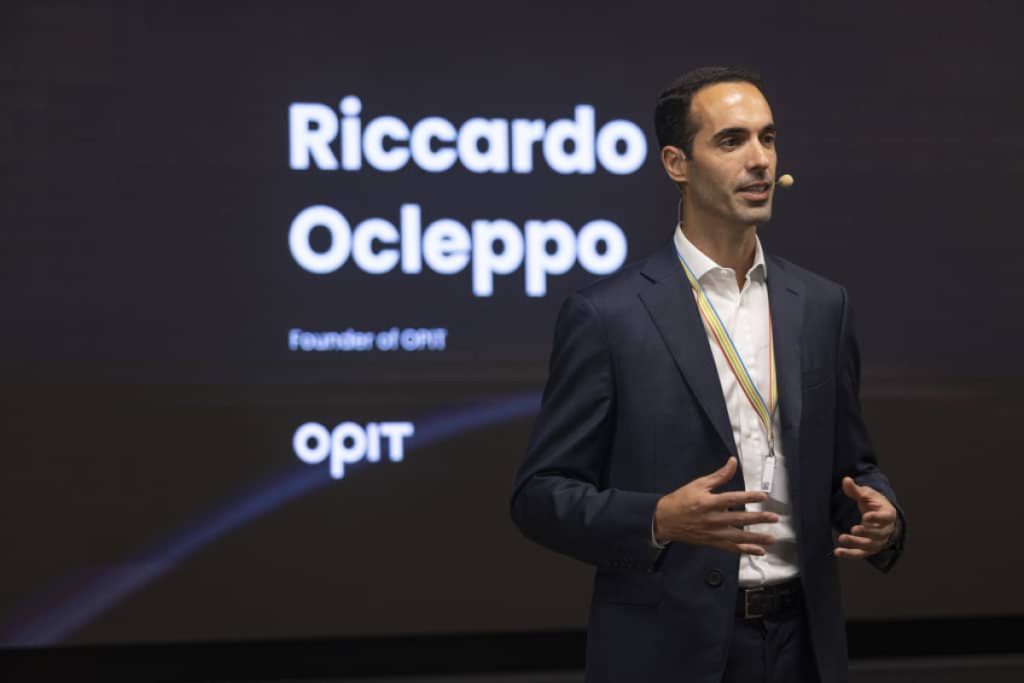
Riccardo Ocleppo, founder and director of OPIT, reinforced this vision: “We want to put technology at the service of higher education. We’re ready to develop solutions not only for our students, but also to share with other global institutions that are eager to innovate the learning experience, to face a future in education that’s fast approaching.”





Have questions?
Visit our FAQ page or get in touch with us!

Write us at +39 335 576 0263

Get in touch at hello@opit.com

Talk to one of our Study Advisors

We are international
We can speak in:


