

Search inside The Magazine

Source:
- Metro, published on October 09th, 2025
After ChatGPT came on the scene in 2022, the tech industry quickly began comparing the arrival of AI to the dawn of the internet in the 1990s.
Back then, dot-com whizzes were minting easy millions only for the bubble to burst in 2000 when interest rates were hiked. Investors sold off their holdings, companies went bust and people lost their jobs.
Now central bank officials are worried that the AI industry may see a similar boom and bust.
A record of the Financial Policy Committee’s October 2 meeting shows officials saying financial market evaluations of AI ‘appear stretched’.
‘This, when combined with increasing concentration within market indices, leaves equity markets particularly exposed should expectations around the impact of AI become less optimistic,’ they added.
AI-focused stocks are mainly in US markets but as so many investors across the world have bought into it, a fallout would be felt globally.
ChatGPT creator OpenAI, chip-maker Nvidia and cloud service firm Oracle are among the AI poster companies being priced big this year.
Earnings are ‘comparable to the peak of the dot-com bubble’, committee members said.
Factors like limited resources – think power-hungry data centres, utilities and software that companies are spending billions on – and the unpredictability of the world’s politics could lead to a drop in stock prices, called a ‘correction’.
In other words, the committee said, investors may be ignoring how risky AI technology is.
Metro spoke with nearly a dozen financial analysts, AI experts and stock researchers about whether AI will suffer a similar fate. There were mixed feelings.
‘Every bubble starts with a story people want to believe,’ says Dat Ngo, of the trading guide, Vetted Prop Firms.
‘In the late 90s, it was the internet. Today, it’s artificial intelligence. The parallels are hard to ignore: skyrocketing stock prices, endless hype and companies investing billions before fully proving their business models.
‘The Bank of England’s warning isn’t alarmist – it’s realistic. When too much capital chases the same dream, expectations outpace results and corrections follow.’
Dr Alessia Paccagnini, an associate Professor from the University College Dublin’s Michael Smurfit Graduate Business School, says that companies are spending £300billion annually on AI infrastructure, while shoppers are spending $12billion. That’s a big difference.
Tech firms listed in the US now represent 30% of New York’s stock index, S&P 500 Index, the highest proportion in 50 years.
‘As a worst-case scenario, if the bubble does burst, the immediate consequences would be severe – a sharp market correction could wipe trillions from stock valuations, hitting retirement accounts and pension funds hard,’ Dr Paccagnini adds.
‘In my opinion, we should be worried, but being prepared could help us avoid the worst outcomes.’
One reason a correction would be so bad is because of how tangled-up the AI world is, says George Sweeney, an investing expert at the personal finance website site Finder.
‘If it fails to meet the lofty expectations, we could see an almighty unravelling of the AI hype that spooks markets, leading to a serious correction,’ he says.
Despite scepticism, AI feels like it’s everywhere these days, from dog bowls and fridges to toothbrushes and bird feeders.
And it might continue that way for a while, even if not as enthusiastically as before, says Professor Filip Bialy, who specialises in computer science and AI ethics at the at Open Institute of Technology.
‘TAI hype – an overly optimistic view of the technological and economic potential of the current paradigm of AI – contributes to the growth of the bubble,’ he says.
‘However, the hype may end not with the burst of the bubble but rather with a more mature understanding of the technology.’
Some stock researchers worry that the AI boom could lose steam when the companies spending billions on the tech see profits dip.
The AI analytic company Qlik found that only one in 10 business say their AI initiatives are seeing sizeable returns.
Qlik’s chief strategy officer, James Fisher, says this doesn’t show that the hype for AI is bursting, ‘but how businesses look at AI is changing’.
OPIT – Open Institute of Technology offers an innovative and exciting way to learn about technology. It offers a range of bachelor’s and master’s programs, plus a Foundation Year program for those taking the first steps towards higher education. Through its blend of instruction-based and independent learning, it empowers ambitious minds with the skills and knowledge needed to succeed.
This guide covers all you need to know to join OPIT and start your educational journey.
Introducing the Open Institute of Technology
Before we dig into the nitty-gritty of the OPIT application process, here’s a brief introduction to OPIT.
OPIT is a fully accredited Higher Education Institution under the European Qualification Framework (EQF) and the MFHEA Authority. It offers exclusively online education in English to an international community of students. With a winning team of top professors and a specific focus on computer science, it trains the technology leaders of tomorrow.
Some of the unique elements that characterize OPIT’s approach include:
- No final exams. Instead, students undergo progressive assessments over time
- A job-oriented, practical focus on the courses
- 24/7 support, including AI assistance and student communities, so everyone feels supported
- A strong network of company connections, unlocking doors for graduates
Reasons to Join OPIT
There are many reasons for ambitious students and aspiring tech professionals to study with OPIT.
Firstly, since all the study takes place online, it’s a very flexible and pleasant way to learn. Students don’t feel the usual pressures or suffer the same constraints they would at a physical college or university. They can attend from anywhere, including their own homes, and study at a pace that suits them.
OPIT is also a specialist in the technology field. It only offers courses focused on tech and computer science, with a team of professors and tutors who lead the way in these topics. This ensures that students get high-caliber learning opportunities in this specific sector.
Learning at OPIT is also hands-on and applicable to real-world situations, despite taking place online. Students are not just taught core skills and knowledge, but are also shown how to apply those skills and knowledge in their future careers.
In addition, OPIT strives to make technology education as accessible, inclusive, and affordable as possible. Entry requirements are relatively relaxed, fees are fair, and students from around the world are welcome here.
What You Need to Know About Joining OPIT
Now you know why it’s worth joining OPIT, let’s take a closer look at how to go about it. The following sections will cover how to apply to OPIT, entry requirements, and fees.
The OPIT Application Process
Unsurprisingly for an online-only institution, the application process for OPIT is all online, too. Users can submit the relevant documents and information on their computers from the comfort of their homes.
- Visit the official OPIT site and click the “Apply now” button to get started, filling out the relevant forms.
- Upload your supporting documents. These can include your CV, as well as certificates to prove your past educational accomplishments and level of English.
- Take part in an interview. This should last no more than 30 minutes. It’s a chance for you to talk about your ambitions and background, and to ask questions you might have about OPIT.
That’s it. Once you complete the above steps, you will be admitted to your chosen course and can start enjoying OPIT education once the first term begins. You’ll need to sign your admissions contract and pay the relevant fees, then begin classes.
Entry Requirements for OPIT Courses
OPIT offers a small curated collection of courses, each with its own requirements. You can consult the relevant pages on the official OPIT site to find out the exact details.
For the Foundation Program, for example, you simply need an MQF/EQF Level 3 or equivalent qualification. You also need to demonstrate a minimum B2 level of English comprehension.
For the BSc in Digital Business, applicants should have a higher secondary school leaving certificate, plus B2-level English comprehension. You can also support your application with a credit transfer from previous studies or relevant work experience.
Overall, the requirements are simple, and it’s most important for applicants to be ambitious and eager to build successful careers in the world of technology. Those who are driven and committed will get the best from OPIT’s instruction.
Fees and Flexible Payments at OPIT
As mentioned above, OPIT makes technological education accessible and affordable for all. Its tuition fees cover all relevant teaching materials, and there are no hidden costs or extras. The institute also offers flexible payment options for those with different budgets.
Again, exact fees vary depending on which course you want to take, so it’s important to consult the specific info for each one. You can pay in advance to enjoy 10% off the final cost, or refer a friend to also obtain a discount.
In addition to this, OPIT offers need-based and merit-based scholarships. Successful candidates can obtain discounts of up to 40% on bachelor’s and master’s tuition fees. This can substantially bring the term cost of each program down, making OPIT education even more accessible.
Credit Transfers and Experience
Those who are entering OPIT with pre-existing work experience or relevant academic achievements can benefit from the credit transfer program. This allows you to potentially skip certain modules or even entire semesters if you already have relevant experience in those fields.
OPIT is flexible and fair in terms of recognizing prior learning. So, as long as you can prove your credentials and experience, this could be a beneficial option for you. The easiest way to find out more and get started is to email the OPIT team directly.
Join OPIT Today
Overall, the process to join OPIT is designed to be as easy and stress-free as possible. Everything from the initial application forms to the interview and admission process is straightforward. Requirements and fees are flexible, so people in different situations and from different backgrounds can get the education they want. Reach out to OPIT today to take your first steps to tech success.
With the proliferation of the internet, the rise of smart devices, and the emergence of AI, the world has become increasingly technological. Unsurprisingly, then, many young and ambitious minds are eager to engage with technology on a professional scale, planning careers in the field. But to succeed in the complex, evolving world of tech, it helps to have a strong foundation of core skills.
That’s where the Foundation Year Program at the Open Institute of Technology (OPIT) comes into play. This program gives students the knowledge and skills they need to succeed. Covering digital business, computer science, mathematics, and other important topics, it prepares tech leaders of tomorrow for the next steps in their development.
Introducing OPIT
The Open Institute of Technology is a fully accredited Higher Education Institution under the European Qualification Framework (EQF) and the MFHEA Authority. It offers both bachelor’s and master’s degrees, in addition to the Foundation Program. OPIT’s mission is to provide high-quality, inclusive, and affordable technology education.
The institute distinguishes itself from other educational establishments as follows:
- Exclusively online education, delivered in English
- A team of top professors from leading universities around the globe
- No final exams, but a system of progressive assessment to track students’ progress organically
- European-level accreditation
- Round-the-clock support
- Affordable prices
Education at OPIT is flexible, focused, and built for career success. Its hands-on approach to learning can unlock countless doors of opportunity for those who enroll.
Learning Methodology for the OPIT Foundation Year
Technology is a rapidly evolving field. However, higher education in technology has stagnated somewhat. That was the view of Riccardo Ocieppo, and it was the reason he founded OPIT. He wanted to provide an innovative, online, and international institution to prepare students for careers in technology in the best ways possible.
OPIT delivers on this mission through an innovative approach to learning. This approach is centered around competence-based teaching. In other words, OPIT not only teaches students foundational skills but also demonstrates the practical, real-world applications of those skills.
In addition, despite being entirely online, the Foundation Program aims to foster a sense of community. Students have continuous access to their peers, tutors, and professors. This way, they always feel part of a team, and they never feel cut off or isolated from their educational community.
An Overview of the Foundation Program
The Foundation Program is OPIT’s sole pre-bachelor program. As its name implies, it focuses on foundational knowledge and skills. It equips students with the education they need to springboard onwards into further education, like a bachelor’s degree. This is invaluable, as too many students have the drive to begin degrees in technology, but lack the required MQF or EQF Level 4 qualification.
The Foundation Program provides a pathway for students in that situation and others. It eases their entry into the professional technological world. Core aims of the program include:
- Strengthen technical proficiency
- Development of an understanding of ethical and social responsibility relevant to technology
- Promotion of a human-centered approach to technology
- Improvement in core skills like mathematics, English, and computer literacy
- Creation of an EQF Level 4-tier academic base, so students can proceed into a bachelor’s degree
The Foundation Program lasts for six months and is fully online. It is comprised of two terms, lasting 13 weeks each. Students complete three courses per term, each worth 10 ECTS credits, for a total of 60 credits.
The instruction is delivered in several formats. These include video lectures, learning materials such as e-books, and weekly live sessions. Students must also complete two to three assessments during the course. These, too, can take multiple formats, like tests, essays, and projects.
By the end of the course, students will have a stronger understanding of technology. They will also have gained or improved upon numerous essential skills needed to move on with their education. They will be better prepared to succeed, no matter which direction they choose to follow next.
Student Support Systems
To ensure no student feels isolated or lacking assistance, OPIT offers a strong support system.
For example, the institute’s professors regularly check in with students, answer queries, and provide vital guidance. OPIT also provides an AI assistant that has been specially trained to help students succeed. The OPIT AI Copilot answers questions instantly, finds resources, sums up complex topics, and more. Students can also chat with one another over Slack, so no one will ever feel alone.
Future Prospects
The OPIT Foundation Program is all about preparation. It’s about getting students ready for the next steps, and it unlocks a lot of doors. For those who haven’t got a formal Level 4 qualification, for example, the Foundation Program creates a path to bachelor’s degrees. It lets students move on to a BSc in Digital Business or a BSc in Modern Computer Science, for example.
What’s more, those who intend to continue their education with OPIT receive several big benefits. These include a 25% scholarship reduction in tuition fees for any OPIT bachelor’s program. Plus, those who follow the Foundation Program will become familiar with OPIT’s modes of education and the OPIT community. So, transitioning onward into a degree should be easy and seamless.
Admissions Information and Requirements
For those who are interested in pursuing a foundation year with OPIT, there are certain requirements:
- Applicants must hold a High School Leaving Certificate in any discipline.
- They must also demonstrate a certain level of English language ability.
The application process is entirely online. Applicants will have to provide some information and supporting documents. They will be invited to a 30-minute interview to discuss their background and ambitions. Once admitted, it’s simply a matter of signing the relevant paperwork, paying the fees, and officially entering the OPIT community.
A Solid Foundation Year for Future Success
The OPIT Foundation Program breaks the barriers that have prevented ambitious technology enthusiasts from pursuing their dreams. In this exciting sphere, it leads the way towards higher education and gives students the knowledge they need to succeed. It is the ideal way to begin your journey towards a long and fulfilling career in technology.
Source:
- Times of Malta, published on September 18th, 2025
4 min read
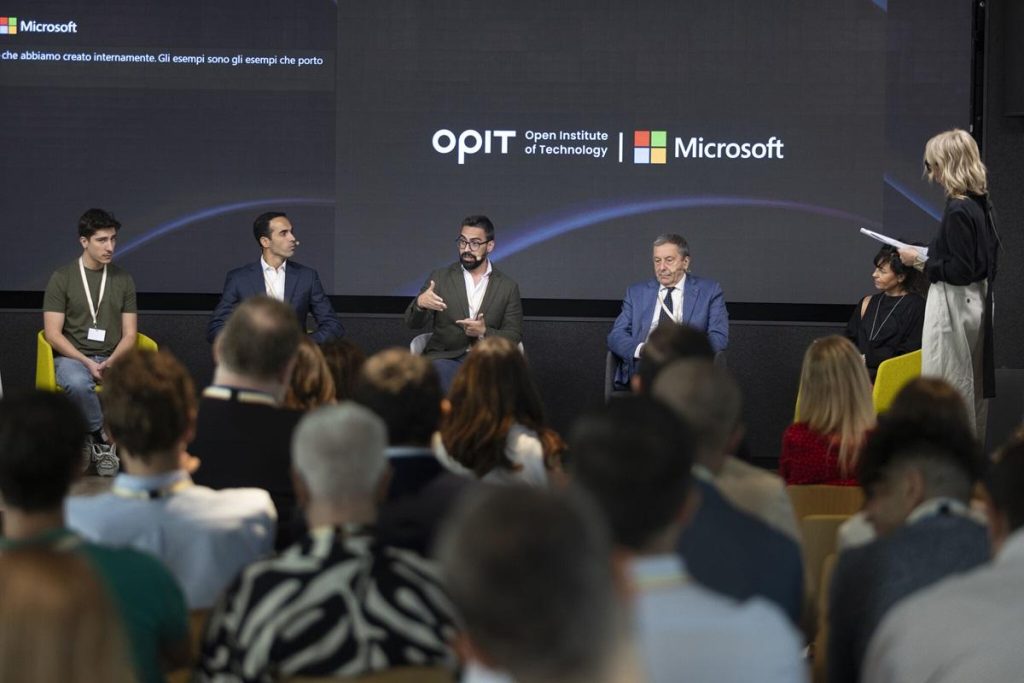
The gathering brought together academics and technology leaders from prominent European Institutions, such as Instituto de Empresa (IE University), OPIT itself and the Royal College of Arts, to explore how artificial intelligence is reshaping the university experience.
The OPIT AI Copilot has been trained on the institute’s complete academic archive, a collection created over the past three years that includes 131 courses, more than 3,500 hours of recorded lectures, 7,500 study resources, 320 certified assessments, and thousands of exercises and original learning documents.
Unlike generic AI tools, the Copilot is deeply integrated with OPIT’s learning management system, allowing it to track each student’s progress and provide tailored support.
This integration means the assistant can reference relevant sources within the learning environment, adapt to the student’s stage of study, and ensure that unreleased course content remains inaccessible.
A mobile app is also scheduled for release this autumn, that will allow students to download exercise and access other tools.
During examinations, the Copilot automatically switches to what the institute calls an “anti-cheating mode”, restricting itself to general research support rather than providing direct answers.
For OPIT’s international community of 500 students from nearly 100 countries, many of whom balance studies with full-time work, the ability to access personalised assistance at any time of day is a key advantage.
“Eighty-five per cent of students are already using large language models in some way to study,” said OPIT founder and director Riccardo Ocleppo. “We wanted to go further by creating a solution tailored to our own community, reflecting the real experiences of remote learners and working professionals.”
Tool aims to cut correction time by 30%
The Copilot will also reduce administrative burdens for faculty. It can help grade assignments, generate new educational materials, and create rubrics that allow teachers to cut correction time by as much as 30 per cent.
According to OPIT, this will free up staff to dedicate more time to teaching and direct student engagement.
At the Milan event, Rector Francesco Profumo underlined the broader implications of AI in higher education. “We are in the midst of a deep transformation, where AI is no longer just a tool: it is an environment that radically changes how we learn, teach, and create,” he said.
“But it is not a shortcut. It is a cultural, ethical, and pedagogical challenge, and to meet it we must have the courage to rethink traditional models and build bridges between human and artificial intelligence.”
OPIT was joined on stage by representatives from other leading institutions, including Danielle Barrios O’Neill of the Royal College of Art, who spoke about the role of AI in art and creativity, and Francisco Machin of IE University, who discussed applications in business and management education.
OPIT student Asya Mantovani, also employed at a leading technology and consulting firm in Italy, gave a first-hand account of balancing professional life with online study.
The assistant has been in development for the past eight months, involving a team of OPIT professors, researchers, and engineers.
Ocleppo stressed that OPIT intends to make its AI innovations available beyond its own institution. “We want to put technology at the service of higher education,” he said.
“Our goal is to develop solutions not only for our own students, but also to share with global institutions eager to innovate the learning experience in a future that is approaching very quickly.”
From personalization to productivity: AI at the heart of the educational experience.
Click this link to read and download the e-book.
At its core, teaching is a simple endeavour. The experienced and learned pass on their knowledge and wisdom to new generations. Nothing has changed in that regard. What has changed is how new technologies emerge to facilitate that passing on of knowledge. The printing press, computers, the internet – all have transformed how educators teach and how students learn.
Artificial intelligence (AI) is the next game-changer in the educational space.
Specifically, AI agents have emerged as tools that utilize all of AI’s core strengths, such as data gathering and analysis, pattern identification, and information condensing. Those strengths have been refined, first into simple chatbots capable of providing answers, and now into agents capable of adapting how they learn and adjusting to the environment in which they’re placed. This adaptability, in particular, makes AI agents vital in the educational realm.
The reasons why are simple. AI agents can collect, analyse, and condense massive amounts of educational material across multiple subject areas. More importantly, they can deliver that information to students while observing how the students engage with the material presented. Those observations open the door for tweaks. An AI agent learns alongside their student. Only, the agent’s learning focuses on how it can adapt its delivery to account for a student’s strengths, weaknesses, interests, and existing knowledge.
Think of an AI agent like having a tutor – one who eschews set lesson plans in favour of an adaptive approach designed and tweaked constantly for each specific student.
In this eBook, the Open Institute of Technology (OPIT) will take you on a journey through the world of AI agents as they pertain to education. You will learn what these agents are, how they work, and what they’re capable of achieving in the educational sector. We also explore best practices and key approaches, focusing on how educators can use AI agents to the benefit of their students. Finally, we will discuss other AI tools that both complement and enhance an AI agent’s capabilities, ensuring you deliver the best possible educational experience to your students.

The Open Institute of Technology (OPIT) began enrolling students in 2023 to help bridge the skills gap between traditional university education and the requirements of the modern workplace. OPIT’s MSc courses aim to help professionals make a greater impact on their workplace through technology.
OPIT’s courses have become popular with business leaders hoping to develop a strong technical foundation to understand technologies, such as artificial intelligence (AI) and cybersecurity, that are shaping their industry. But OPIT is also attracting professionals with strong technical expertise looking to engage more deeply with the strategic side of digital innovation. This is the story of one such student, Obiora Awogu.
Meet Obiora
Obiora Awogu is a cybersecurity expert from Nigeria with a wealth of credentials and experience from working in the industry for a decade. Working in a lead data security role, he was considering “what’s next” for his career. He was contemplating earning an MSc to add to his list of qualifications he did not yet have, but which could open important doors. He discussed the idea with his mentor, who recommended OPIT, where he himself was already enrolled in an MSc program.
Obiora started looking at the program as a box-checking exercise, but quickly realized that it had so much more to offer. As well as being a fully EU-accredited course that could provide new opportunities with companies around the world, he recognized that the course was designed for people like him, who were ready to go from building to leading.
OPIT’s MSc in Cybersecurity
OPIT’s MSc in Cybersecurity launched in 2024 as a fully online and flexible program ideal for busy professionals like Obiora who want to study without taking a career break.
The course integrates technical and leadership expertise, equipping students to not only implement cybersecurity solutions but also lead cybersecurity initiatives. The curriculum combines technical training with real-world applications, emphasizing hands-on experience and soft skills development alongside hard technical know-how.
The course is led by Tom Vazdar, the Area Chair for Cybersecurity at OPIT, as well as the Chief Security Officer at Erste Bank Croatia and an Advisory Board Member for EC3 European Cybercrime Center. He is representative of the type of faculty OPIT recruits, who are both great teachers and active industry professionals dealing with current challenges daily.
Experts such as Matthew Jelavic, the CEO at CIM Chartered Manager Canada and President of Strategy One Consulting; Mahynour Ahmed, Senior Cloud Security Engineer at Grant Thornton LLP; and Sylvester Kaczmarek, former Chief Scientific Officer at We Space Technologies, join him.
Course content includes:
- Cybersecurity fundamentals and governance
- Network security and intrusion detection
- Legal aspects and compliance
- Cryptography and secure communications
- Data analytics and risk management
- Generative AI cybersecurity
- Business resilience and response strategies
- Behavioral cybersecurity
- Cloud and IoT security
- Secure software development
- Critical thinking and problem-solving
- Leadership and communication in cybersecurity
- AI-driven forensic analysis in cybersecurity
As with all OPIT’s MSc courses, it wraps up with a capstone project and dissertation, which sees students apply their skills in the real world, either with their existing company or through apprenticeship programs. This not only gives students hands-on experience, but also helps them demonstrate their added value when seeking new opportunities.
Obiora’s Experience
Speaking of his experience with OPIT, Obiora said that it went above and beyond what he expected. He was not surprised by the technical content, in which he was already well-versed, but rather the change in perspective that the course gave him. It helped him move from seeing himself as someone who implements cybersecurity solutions to someone who could shape strategy at the highest levels of an organization.
OPIT’s MSc has given Obiora the skills to speak to boards, connect risk with business priorities, and build organizations that don’t just defend against cyber risks but adapt to a changing digital world. He commented that studying at OPIT did not give him answers; instead, it gave him better questions and the tools to lead. Of course, it also ticks the MSc box, and while that might not be the main reason for studying at OPIT, it is certainly a clear benefit.
Obiora has now moved into a leading Chief Information Security Officer Role at MoMo, Payment Service Bank for MTN. There, he is building cyber-resilient financial systems, contributing to public-private partnerships, and mentoring the next generation of cybersecurity experts.
Leading Cybersecurity in Africa
As well as having a significant impact within his own organization, studying at OPIT has helped Obiora develop the skills and confidence needed to become a leader in the cybersecurity industry across Africa.
In March 2025, Obiora was featured on the cover of CIO Africa Magazine and was then a panelist on the “Future of Cybersecurity Careers in the Age of Generative AI” for Comercio Ltd. The Lagos Chamber of Commerce and Industry also invited him to speak on Cybersecurity in Africa.
Obiora recently presented the keynote speech at the Hackers Secret Conference 2025 on “Code in the Shadows: Harnessing the Human-AI Partnership in Cybersecurity.” In the talk, he explored how AI is revolutionizing incident response, enhancing its speed, precision, and proactivity, and improving on human-AI collaboration.
An OPIT Success Story
Talking about Obiora’s success, the OPIT Area Chair for Cybersecurity said:
“Obiora is a perfect example of what this program was designed for – experienced professionals ready to scale their impact beyond operations. It’s been inspiring to watch him transform technical excellence into strategic leadership. Africa’s cybersecurity landscape is stronger with people like him at the helm. Bravo, Obiora!”
Learn more about OPIT’s MSc in Cybersecurity and how it can support the next steps of your career.
Open Institute of Technology (OPIT) masterclasses bring students face-to-face with real-world business challenges. In OPIT’s July masterclass, OPIT Professor Francesco Derchi and Ph.D. candidate Robert Mario de Stefano explained the principles of regenerative businesses and how regeneration goes hand in hand with growth.
Regenerative Business Models
Professor Derchi began by explaining what exactly is meant by regenerative business models, clearly differentiating them from sustainable or circular models.
Many companies pursue sustainable business models in which they offset their negative impact by investing elsewhere. For example, businesses that are big carbon consumers will support nature regeneration projects. Circular business models are similar but are more focused on their own product chain, aiming to minimize waste by keeping products in use as long as possible through recycling. Both models essentially aim to have a “net-zero” negative impact on the environment.
Regenerative models are different because they actively aim to have a “net-positive” impact on the environment, not just offsetting their own use but actively regenerating the planet.
Massive Transformative Purpose
While regenerative business models are often associated with philanthropic endeavors, Professor Derchi explained that they do not have to be, and that investment in regeneration can be a driver of growth.
He discussed the importance of corporate purpose in the modern business space. Having a strong and clearly stated corporate purpose is considered essential to drive business decision-making, encourage employee buy-in, and promote customer loyalty.
But today, simple corporate missions, such as “make good shoes,” don’t go far enough. People are looking for a Massive Transformational Purpose (MTP) that can take the business to the next level.
Take, for example, Ben & Jerry’s. The business’s initial corporate purpose may have been to make great ice cream and serve it up in a way that people will enjoy. But the business really began to grow when they embraced an MTP. As they announced in their mission statement, “We believe that ice cream can change the world.” Their business activities also have the aim of advancing human rights and dignity, supporting social and economic justice, and protecting and restoring the Earth’s natural systems. While these aims are philanthropic, they have also helped the business grow.
RePlanet
Professor Derchi next talked about RePlanet, a business he recently worked to develop their MTP. Founded in 2015, RePlanet designs and implements customized renewable energy solutions for businesses and projects. The company already operates in the renewable energy field and ranked as the 21st fastest-growing business in Italy in 2023. So while they were already enjoying great success, Derchi worked with them to see if actively embracing a regenerative business model could unlock additional growth.
Working together, RePlanet moved towards an MTP of building a greener future based on today’s choices, ensuring a cleaner world for generations. Meeting this goal started with the energy products that RePlanet sells, such as energy systems that recover heat from dairy farms. But as the business’s MTP, it goes beyond that. RePlanet doesn’t just engage suppliers; it chooses partners that share its specific values. It also influences the projects they choose to work on – they prioritize high-impact social projects, such as recently installing photovoltaic energy systems at a local hospital in Nigeria – and how RePlanet treats its talent, acknowledging that people are the true energy of the company.
Regenerative Business Strategies
Based on work with RePlanet and other businesses, Derchi has identified six archetypal regenerative business strategies for businesses that want to have both a regenerative impact and drive growth:
- Regenerative Leadership – Laying the foundation for regeneration in a broader sense throughout the company
- Nature Regeneration – Strategies to improve the health of the natural world
- Social Regeneration – Regenerating human ecosystems through things such as fair-trade practices
- Responsible Sourcing – Empowering and strengthening suppliers and their communities
- Health & Well-being – Creating products and services that have a positive effect on customers
- Employee Focus – Improve work conditions, lives, and well-being of employees.
Case Studies
Building on the concept of regenerative business models, Roberto Mario de Stefano shared other case studies of businesses that are having a positive impact and enjoying growth thanks to regenerative business models and strategies.
Biorfarm
Biorfarm is a digital platform that supports small-scale agriculture by creating a direct link between small farmers and consumers. Cutting out the middleman in modern supply chains means that farmers earn about 50% more for their produce. They set consumers up as “digital farmers” who actively support and learn about farming activities to promote more conscious food consumption.
Their vision is to create a food economy in which those who produce food and those who consume it are connected. This moves consumers from passive cash cows for large corporations that prioritize profits over the well-being of farmers to actively supporting natural production and a more sustainable system.
Rifo Lab
Rifo Lab is a circular clothing brand with the vision of addressing the problem of overproduction in the clothing industry. Established in Prato, Italy, a traditional textile-producing area, the company produces clothes made from textile waste and biodegradable materials. There are no physical stores, and all orders must be placed online; everything is made to order, reducing excess production.
With an eye on social regeneration, all production takes place within 30 kilometers of their offices, allowing the business to support ethical and local production. They also work with companies that actively integrate migrants into the local community, sharing their local artisan crafts with future generations.
Ogyre
Ogyre is a digital platform that allows you to pay fishermen to fish for waste. When fishermen are out conducting their livelihood, they also collect a significant amount of waste from the ocean, especially plastic waste. Ogyre arranges for fishermen to get paid for collecting that waste, which in turn supports the local fishing communities, and then transforms the waste collected into new sustainable products.
Moving Towards a Regenerative Future
The masterclass concluded with a Q&A session, where it explained that working in regenerative businesses requires the same skills as any other business. But it also requires you to embrace a mindset where value comes from giving and that growth is about working together for a better future, and not just competition.

Riccardo Ocleppo’s vision for the Open Institute of Technology (OPIT) started when he realized that his own university-level training had not properly prepared him for the modern workplace. Technological innovation is moving quickly and changing the nature of work, while university curricula evolve slowly, in part due to systems in place designed to preserve the quality of courses.
Ocleppo was determined to create a higher learning institution that filled the gap between the two realities – delivering high-quality education while preparing professionals to work in dynamic environments that keep pace with technology. Thus, OPIT opened enrolments in 2023 with a curriculum that created a unique bridge between the present and the future.
This is the story of one student, Ania Jaca, whose time at OPIT gave her the skills to connect her knowledge of product design to full system deployment.
Meet Ania
Ania is an example of an active professional who was able to identify what was missing in her own skills that would be needed if she wanted to advance her career in the direction she desired.
Ania is a highly skilled professional who was working on product and industrial design at Deloitte. She has an MA in product design, speaks five languages, studied in China, and is an avid boxer. She had the intelligence and the temperament to succeed in her career, but felt that she lacked the skills to advance and move from determining how products look to how systems really work, scale, and evolve.
Ania taught herself skills such as Python, artificial intelligence (AI), and cloud infrastructure, but soon realized that she needed a more structured education to go deeper. Thus, the search for her next steps began, and her introduction to OPIT.
OPIT appealed to Ania because it offered a fully EU-accredited MSc that she could pursue at her own pace, thanks to remote delivery and flexible hours. But more than that, it filled exactly the knowledge gap she was looking to build upon, teaching her technical foundations, but always with a focus on applications in the real world. Part of the appeal was the faculty, which includes professionals who are leaders in their field and who deal with current professional challenges on a daily basis, which they can bring into the classroom.
Ania enrolled in OPIT’s MSc in Applied Data Science & AI.
MSc in Applied Data Science and AI
This is OPIT’s first master’s program, which also launched in 2023, and is now one of four on offer. The course is designed for graduates like Ania who want a career at the intersection of management and technology. It is attractive to professionals who are already working in this area but lack the technical training to step into certain roles. OPIT requires no computer science prerequisites, so it accepted Ania with her MA in product design.
It is an intensive program that starts with foundational application courses in business, data science, machine learning, artificial intelligence, and problem-solving. The program then moves towards applying data science and AI methodologies and tools to real-life business problems.
The course combines theoretical study with a capstone project that lets students apply what they learn in the real world, either at their existing company or through internship programs. Many of the projects developed by students go on to become fundamental to the businesses they work with.
Ania’s Path Forward
Ania is working on her capstone project with Neperia Group, an Italian-based IT systems development company that works mostly with financial, insurance, and industrial companies. They specialize in developing analysis tools for existing software to enhance insight, streamline management, minimize the impact of corrective and evolutionary interventions, and boost performance.
Ania is specifically working on tools for assessing vulnerabilities in codebases as an advanced cybersecurity tool.
Ania credits her studies at OPIT for helping her build solid foundations in data science, machine learning, and cloud workflows, giving her a thorough understanding of digital products from end to end. She feels this has prepared her for roles at the intersection between infrastructure, security, and deployment, which is exactly where she wants to be. OPIT is excited to see where Ania’s career takes her in the coming years.
Preparing for the Future of Work
Overall, studying at OPIT has helped Ania and others like her prepare for the future of work. According to the Visual Capitalist, the fastest-growing jobs between 2025 and 2030 will be in big data (up by 110%), Fintech engineers (up by 95%), AI and machine learning specialists (up by 85%), software application developers (up by 60%), and security management specialists (up by 55%).
However, while these industries are growing, entry-level opportunities are declining in areas such as software development and IT. This is because AI now performs many of the tasks associated with those roles. Instead, companies are looking for experienced professionals to take on roles that involve more strategic oversight and innovative problem-solving. But how do recent graduates leapfrog past experienced professionals when there is a lack of entry-level positions to make the transition?
This is another challenge that OPIT addresses in its course design. Students don’t just learn the theory, OPIT actively encourages them to focus on applications, allowing them to build experience while studying. The capstone project consolidates this, enabling students to demonstrate to future employers their expertise at deploying technology to solve problems.
OPIT also has a dynamic Career Services department that specifically works with students to prepare them for the types of roles they want. This focus on not only learning but building a career is one of the elements that makes OPIT stand out in preparing graduates for the workplace.





Have questions?
Visit our FAQ page or get in touch with us!

Write us at +39 335 576 0263

Get in touch at hello@opit.com

Talk to one of our Study Advisors

We are international
We can speak in:


