

Data Science & AI
Dive deep into data-driven technologies: Machine Learning, Reinforcement Learning, Data Mining, Big Data, NLP & more. Stay updated.
Search inside The Magazine

The Open Institute of Technology (OPIT) has swiftly cemented its reputation as one of the best places to study emerging technologies, like AI. Many students speak highly of the institute’s forward-thinking approach to education and a clear focus on hands-on, practical knowledge. One of those students, Cristobal Bragagnolo, recently sat down for a video interview to explain what made him choose OPIT over other options.
Quick Summary
- Cristobal Bragagnolo, an OPIT master’s student, was interviewed on why he chose OPIT.
- Cristobal cited numerous advantages, like OPIT’s accessibility and the quality of the course.
- He also spoke of the unique freedom and flexibility that only come with online learning.
- Cristobal recommends prospective applicants consider OPIT’s distinct qualities when choosing their next educational steps.
The Interview
This interview was organized as a way for prospective OPIT students to learn more about what makes studying with OPIT so special, different, and beneficial in ways they might not have expected. The interviewer was Santiago Fonesca, OPIT’s International Student Recruiter, who spoke with Cristobal, a student of the Master’s Degree (MSc) in Responsible Artificial Intelligence.
Why Cristobal Chose OPIT
One of the first questions Cristobal was asked was why he chose OPIT over other institutions.
Having previously studied biology at the University of Granada in southern Spain, he was clearly familiar with the world of conventional higher education and could have continued his studies at one of the many highly-rated universities in his own home nation or elsewhere in Europe. Despite this, he chose OPIT, and there were several big reasons behind that decision.
Accessibility
Typically, at a conventional college or university, applicants to study a course related to responsible AI would usually have some sort of background in computer science. Indeed, it would be quite difficult to get a place on a course of this kind without either a relevant bachelor’s degree or extensive working experience with technology or AI in particular.
Cristobal knew this, explaining that “traditional universities’ programs for artificial intelligence” were only open to the likes of mathematicians or physicists. Upon finding OPIT, he realized how different it was. OPIT didn’t turn him away based on his previous, seemingly unrelated resume. Instead, he was invited to an interview and allowed to study a short “pre-course” before enrolling in the master’s program.
For Cristobal, this was a breath of fresh air. He describes the pre-course as “amazing,” adding that it felt like a “small degree in computer science” that gave him the foundational skills and knowledge he needed to progress into the program he wanted. He was immediately impressed with how OPIT opened doors for people like him, while other, more conventional universities kept those doors firmly closed.
Depth
Cristobal was also asked about misconceptions people might have about the idea of studying online. He noted that there are still some outdated views that some people hold when it comes to the idea of conventional versus online education, while also acknowledging that there are some small online courses out there that simply don’t have the same depth as a real university-level course.
But he added that, fortunately, that’s not the case at OPIT. As someone who comes from a highly academic background, Cristobal was pleased to see that OPIT courses are fully accredited and enjoy international recognition. He stated in no uncertain terms that OPIT’s MSc in Responsible AI is a genuine Master of Science degree that demands a strong level of commitment and hard work to attain.
He added that he was impressed by the depth of knowledge and the range of topics covered in the course, and appreciated how OPIT’s instructors and lecturers focus on hands-on knowledge and real-world skills, not just reading books and memorizing facts and figures.
Flexibility
Cristobal also touched on the flexibility of studying with OPIT and studying online in general. He noted that OPIT courses offer a level of freedom that simply cannot be found in conventional education. They give students the ability to balance their work life and personal life, or even – like Cristobal himself – the chance to work a full or part-time job in conjunction with their studies.
He explained how he currently works at least 30 hours per week and has other day-to-day tasks that need completing. For him, and people like him, a conventional college or university would not suffice, as he would have to adapt to the institution’s schedule, rules, and fixed geographic location. But by studying online, he’s free to live the life he wants at a pace that’s right for him.
Cristobal also noted that the flexibility of online learning helps him lead a happier and healthier life. It gives him the time he needs to go to the gym, for example, or step outside and get some fresh air when he feels the need. It frees him to cook good meals for himself.
A Typical Week for an OPIT Student
Asked about a typical week in his life, Cristobal explains how, as previously mentioned, he strikes a balance between work and study, doing 30 hours at his job in AI-related work while also studying for his master’s at other times of day or in the evenings. The fact that OPIT’s lectures are pre-recorded and available on-demand allows him to be able to do this with ease.
He adds that he finds time each day for other activities, like taking a walk, and can adjust his schedule to suit his needs and mood each week. Some weeks, he might focus a little harder on studying, for example, spending more time watching lectures live and making notes as he follows. Other times, he may rely more on OPIT’s resource bank to catch or revise certain topics.
He concludes that studying at OPIT has effectively allowed him to have a healthy and balanced life, with equal time for work, study, and personal fulfillment. He compares it to studying for his degree in Granada and notes how he found it much more stressful to keep up with the rigorous routine and fixed constraints of a conventional university.
A Supportive Community
Cristobal also found time during the interview to speak favorably of the OPIT community and support network, bringing up the following key points:
- Sense of Community: Cristobal spoke about how he felt like part of the OPIT community from minute one. He highlighted the availability and friendliness of faculty members and how they were always open and ready to respond to messages or answer questions at almost any time.
- A Global Student Body: Cristobal also spoke favorably of the international quality of the OPIT community, noting how he has professors from different parts of the world, like the United States, Italy, and Germany, and co-learners from places in Africa and Asia.
- Highly Qualified Staff: He also touched on the experience and accomplished nature of the OPIT staff, noting how these aren’t just lecturers or lifelong teachers, but professionals who have proven their skills in real technology businesses.
Summing Up: Cristobal’s Advice for Applicants
Moving forward, Cristobal plans to apply his newfound knowledge in responsible AI to the biological field. He was also asked what he’d tell those who are considering or hesitating about applying to OPIT in the coming weeks and months, noting that he’d encourage them to do their research and weigh up the pros and cons to decide if it’s the right move for them.
Cristobal went on to note that, for many people, OPIT is definitely “one of the best options out there,” due to its peerless levels of accessibility and flexibility. He also noted how the university has a fair and flexible payment system to support different budgets and is highly welcoming even for those who may not already have STEM degrees or experience.
If you feel like OPIT could be the right fit for you, learn more about the courses available on the OPIT website or submit your application today.

The Open Institute of Technology (OPIT) has leveled up its educational offering, adding a professional doctorate program to its curated line-up of courses. The program – Professional Doctorate in Applied Artificial Intelligence – focuses on advanced AI research and the ways in which this exciting technology can be used to shape business strategies and solve organizational problems.
Read on to learn all about it.
Quick Summary
- OPIT has launched a new program: Professional Doctorate in Applied Artificial Intelligence.
- It lasts for six terms, usually spread out over three years of study (a six-year plan is also available).
- It teaches students the skills they need to lead AI-enabled projects, strategies, and research.
- Career pathways include AI business strategy, digital transformation, and AI governance.
- Applicants should hold an MSc (ideally in STEM) and B2 level English proficiency.
Introducing the New Doctorate Program at OPIT
Since its inception, OPIT has offered a small, selective array of courses, giving students a choice of study paths without overwhelming them with too many options. It has focused primarily on bachelor’s and master’s degrees, while also offering an introductory pre-bachelor’s (foundation) program for those taking their first steps towards higher education.
Now, OPIT is offering a whole new level of study with its Professional Doctorate in Applied Artificial Intelligence. It is available to complete on a full-time or part-time basis, and is accessible entirely online. And like other OPIT courses, this program is aimed at the AI leaders, strategists, and project managers of tomorrow, equipping them with the skills and knowledge they need to succeed.
It’s the highest-level program available at OPIT today, for students seeking to achieve the highest standards of knowledge and expertise in their fields. It may not be for everyone, with some students simply settling at bachelor’s or master’s levels. But for those wanting to take that extra step towards excellence, this is the course to choose.
An Overview of OPIT’s Professional Doctorate in Applied Artificial Intelligence
Here’s a closer look at what this course involves:
- Duration: Six terms, spread out over three years (full-time) or six years (part-time).
- Content: Covers foundational and applied topics in AI and technology management. Also involves students creating their own research proposals and carrying out their own investigations, culminating in a doctoral dissertation and defense.
- Focus: Empowering students with the advanced AI research knowledge they need to conduct and even lead AI-enabled projects and strategies in their future careers.
- Format: Delivered entirely online, allowing students to study remotely and at their own pace.
- Assessment: Students will be assessed by completing a capstone research project and a doctoral dissertation, culminating in a defense of their dissertation before a panel of experts.
What the Program Covers
OPIT’s Professional Doctorate in Applied Artificial Intelligence is designed to equip students with the skills and knowledge necessary to apply AI technologies strategically across numerous industries and applications. Like other OPIT programs, it combines academic rigor with real-world applications and focuses not merely on knowledge but on how to put that knowledge to use.
The program covers three main areas of research:
- Core AI Technologies: Including machine learning, deep learning, natural language processing, and computer vision
- Industry Applications: Ways in which AI is and can be used in fields like finance, healthcare, smart cities, environment, and manufacturing
- Responsible and Applied AI: The ethics behind AI, the fundamentals of human-centric AI, and a specialist focus on sectors like AutoML and MLOps
During year one (of the full-time course), students will complete core modules like AI Applications in Industry. Moving into year two, they’ll focus on building their own research proposal and carrying out an initial investigation. Year three will focus exclusively on the capstone research project, dissertation, and an oral defense of said dissertation before the OPIT Examining Committee.
Who This Doctorate Is For
As a Doctorate program, this course is, naturally, not for everyone, but is instead aimed at a select group of applicants who already have a certain amount of expertise and/or experience in the field. Ideal applicants include:
- Mid-to-senior professionals or executives seeking to pursue AI-powered digital transformation of their organizations or future employers
- Domain experts who have already studied and worked with AI extensively, but want to deepen their knowledge and understanding even further
- Applied researchers and innovators seeking to bolster the fundamental research and practical skills needed for future projects
- Aspiring thought leaders and responsible professionals who are committed to discovering and deploying more responsible, ethical uses of AI
- Students who have already completed their bachelor’s and master’s degrees in technology, but still want to continue their educational journeys before moving into the working world
Benefits and Value of Studying a Professional Doctorate at OPIT
Many universities around the world are starting to offer professional doctorate programs in AI and other emerging technologies, but studying at OPIT offers unique advantages that no other school can provide:
- Online Learning: OPIT delivers all its courses, including this program, online. Students can tune into live lectures and access an array of pre-recorded learning materials on demand, allowing them to study at their own pace and from any location.
- Practical Applications: Conventional studies still focus heavily on learning statistics and memorizing information. OPIT takes a different approach, focusing much more on the practical applications of knowledge to give students real-world value.
- Strong Support: All OPIT students, at all levels of education, are part of the OPIT community. They can reach out to their tutors or fellow students at almost any time of the week for advice and assistance, as well as use the institute’s peerless array of support tools.
- Industry Leaders: Doctorate students at OPIT will enjoy learning from some of the world’s leading experts in AI, like Pierluigi Casale, AI Area Chair at OPIT, or Filip Bialy, Professor at Adam Mickiewicz University, with over 15 years of web development and AI ethics experience.
- Career Pathways: Those who succeed in this course will find numerous high-salary professional pathways open up to them. Graduates can move into jobs such as C-level executives, AI business strategists, AI consultants, policy advisors, or applied AI researchers.
Entry Requirements and Fees
Given that this is a Doctorate program, applicants will need to meet certain criteria in terms of their professional and educational background. At the same time, OPIT aims to make all of its courses as accessible as possible, so even if you don’t necessarily have a relevant master’s degree in a STEM field, there are still alternative pathways for admission into this course.
Applicants should possess:
- An MSc degree in a STEM discipline or a non-STEM MSc, but with five years of relevant work experience.
- English proficiency at level B2 or better.
- A statement of purpose outlining their intended research topic.
- A provisional supervisory agreement form.
Regarding fees, the total cost for this course is €24,000, with term fees of €4,000 per term for full-time students and €2,000 per term for part-time students. These fees are all-inclusive, with no hidden charges or optional extras to worry about. Funding opportunities are available via employer sponsorships or professional development funds.
Level Up Your Education at OPIT
So, whether you’re a seasoned tech professional looking to make better use of AI in your business, a researcher eager to uncover the next exciting applications of AI technologies, or a tech-enthusiast student who has completed their master’s and wants to take the next step, the Professional Doctorate in Applied Artificial Intelligence might be the perfect course for you. Browse the OPIT website to learn more or apply now.

As artificial intelligence (AI) rapidly advances and becomes increasingly important in many industries, students are eager to learn all they can about this exciting, emerging technology. The Open Institute of Technology (OPIT) can help facilitate that process, providing a range of AI-oriented bachelor’s and master’s degree programs, such as the MSc in Applied Data Science and AI.
Introducing the OPIT MSc in Applied Data Science and AI
The OPIT MSc in Applied Data Science and AI is a master’s degree program aimed at graduate students seeking careers in management and tech departments of large or growing businesses. It empowers students with practical skills and knowledge related to its two titular concepts: data science and artificial intelligence technologies.
As with other OPIT courses, this MSc is delivered entirely online, making it a flexible and accessible choice for students from around the world. It can appeal to recent bachelor’s degree graduates or seasoned professionals looking to upskill, broaden their knowledge, or even pursue a possible career transition into a new field.
Once students complete the course, which culminates with a capstone project, they will find a wide range of high-demand, high-salary professional opportunities open up to them. Potential careers utilizing this knowledge include data and AI management, strategic consultancy, and product management. Entrepreneurial students may even elect to start their own companies post-graduation.
Here are the key facts that interested applicants may want to know about this course:
- Duration: Either three or four terms, typically over the course of one year.
- Content: Professional-level instruction on subjects related to the fields of data science and AI, including applied machine learning, big data, and the ethics and regulations of artificial intelligence.
- Focus: Equipping graduates with practical skills and hands-on knowledge to thrive at the intersection of management and tech departments within organizations.
- Format: Online, with a mix of pre-recorded content that students can access on demand, along with a schedule of live lectures.
- Assessment: Progressive assessment, which measures students’ understanding as they proceed through the course, rather than relying solely on tests or final exams. Students will also complete a capstone project.
What You’ll Learn
Students of the MSc in Applied Data Science and AI will begin in the first term by studying foundational applicable courses related to data science and AI. Core topics covered include Python programming for data science, applied artificial intelligence, big data, and cloud computing infrastructure. Students will also gain core project management skills, which may prove vital for their future careers.
In the second term, students will deepen their knowledge with an array of mandatory and elective courses. Mandatory topics covered include business communication skills, research methods, and the ethics and regulation of artificial intelligence. When it comes to electives, students will be able to look into how AI and data science can be used in specific industries, like healthcare, fintech, and public policy.
In the final term, students will put the knowledge they have gained to the test. They will complete their MSc thesis, including a capstone project and dissertation. They’ll work alongside an OPIT supervisor to develop and realize a project proposal, demonstrating their mastery of the topics covered in the preceding terms.
Who It’s For
The MSc in Applied Data Science and AI program can appeal to recent graduates, seasoned professionals considering a career change, or anyone else with a passion for technology or a specific interest in AI and data science. It’s an ideal choice for those who seek to gain a broad level of knowledge of both data and emerging AI technologies, rather than specializing in either one field or the other.
Those who have already obtained a bachelor’s degree in a relevant field will have the best chance of success in this course. As such, it’s well-suited to those who have just graduated from courses like OPIT’s BSc in Digital Business or BSc in Computer Science. Graduates will be able to take their pick from an array of excellent career roles, like Business Intelligence Manager or Chief Data Officer.
The Value of the MSc in Applied Data Science and AI Course at OPIT
Many colleges and universities are starting to offer an increasing variety of degrees and master’s programs related to AI and data science. But OPIT offers a truly unique learning experience that students can’t find anywhere else. Some of the benefits of enrolling in this course include:
- Convenient Online Instruction: The OPIT MSc in Applied Data Science and AI is provided entirely online, which means that students don’t need to worry about traveling to a specific location and the costs and complications that come with that. They can simply access their learning materials on-demand, from the comfort of home. It’s one of the most flexible, efficient ways to learn.
- Valuable, Practical Instruction: Students have long complained about conventional educational systems that demand too much time and focus on knowledge that may have academic value but little practical usage. OPIT takes a different view. Its courses – including the MSc in Applied Data Science and AI – include a strong emphasis on skills and knowledge you can truly use for years to come.
- Leading Lecturers and Strong Support: At OPIT, students have the chance to study and learn from some of the world’s best researchers and tech professionals. Some of the leading lecturers on this course include AI entrepreneur Moez Ali and former parliamentary innovation officer Pierluigi Casale. Students can contact lecturers when they feel the need and participate in communal groups to help and learn from one another, too.
Entry Requirements and Fees
OPIT aims to make high-level technological education as accessible and affordable as possible, inviting students from different backgrounds and walks of life to enroll and take part. The entry requirements are relatively relaxed. Applicants should have a passion for technology and a strong eagerness to learn about data science and the applications of AI, along with:
- A BSc degree, ideally in STEM, but not necessary
- An English language proficiency certificate at level B2
With OPIT’s credit transfer system, you may be able to skip some of the subjects or even an entire term of the MSc in Applied Data Science and AI program, depending on your prior experiences and existing qualifications.
With regard to cost, the full price for this MSc program is €6,750, or €2,250 per term. You can make one payment or pay on a installment basis, and OPIT offers a variety of financing plans and even scholarships to help you manage your payments or potentially reduce the total cost.

It’s the age of artificial intelligence (AI), and this exciting, extraordinary technology is only going to play an increasing role in our lives as time goes on. As a result, a growing number of ambitious students are eager to master AI today so they’re able to play a bigger part in the AI revolution of tomorrow. And the Open Institute of Technology’s (OPIT) MSc in Responsible AI course is a great way to get started.
Introducing the OPIT MSc in Responsible AI
The OPIT MSc in Responsible AI is a master’s degree program oriented entirely around the subject of AI technology and how it can and should be used in a responsible, ethical fashion. This is a vital subject at the moment, given the increasing importance of AI and the numerous risks associated with how it might be misused or exploited.
Like other OPIT courses, the MSc in Responsible AI aims to equip students with the practical skills and real-world knowledge they need to thrive in their chosen careers. It’s not about inundating students with enormous amounts of information and superfluous details, but empowering them to understand the possible applications and take an active role in the exciting and rapidly evolving AI space.
Also, like other courses in OPIT, they deliver this flexible master’s degree in AI technology entirely online. As a result, students from around the world can participate, with no geographic barriers in their way. Once they graduate, successful students can move on into a range of career paths in fields like AI business strategy, AI entrepreneurship, and AI product management.
Here’s a brief breakdown of what the course entails and what applicants can expect:
- Duration: Either three or four terms, usually over the span of one year.
- Content: The program provides advanced-level instruction on topics oriented around AI technology and how to put it to good use in the digital business world and beyond, while focusing on the course’s core concepts of responsible, sustainable, and ethical usage of AI.
- Focus: Empowering graduates with the relevant skills and hands-on knowledge they need to pursue a career in AI or spearhead initiatives aimed at harnessing AI in responsible, eco-friendly ways.
- Format: Entirely online, with a balanced blend of pre-recorded content – accessible at any time – and live lectures.
- Assessment: A progressive assessment system that measures students’ understanding as they proceed through the course, culminating in a capstone project in the final term.
What You’ll Learn
Students of the MSc in Responsible AI will enjoy the opportunity to massively deepen their knowledge and understanding of AI technology, with a special focus on the ethical implications and challenges that this technology can present. Some of the topics covered during the first term include machine learning and data analytics.
The second term further builds on this, touching on topics like AI in business and entrepreneurship, computing architecture for AI applications, and natural language processing. During this term, students also have the chance to choose one of several elective subjects, allowing them to specialize or learn more about a topic of particular interest to them, like agentic AI or AI for IoT.
The course culminates with the final term – which can also be extended to two segments should the need arise – in which students will be tasked with completing a capstone project and dissertation, putting their acquired knowledge to the test. Students will also benefit from studying under highly regarded researchers and professionals, like AI specialist Zorina Alliata and AI entrepreneur Moez Ali.
Who It’s For
The MSc in Responsible AI program welcomes anyone with a specialist interest or passion for AI technology. It especially suits those who care deeply about the ethical use of technology and want to research or even discover responsible, sustainable ways to employ AI. In short, it’s an appealing choice for the aspiring AI leaders of tomorrow.
Given that this is a master’s program, some level of relevant technical expertise before enrolling is recommended. Graduates may wish to earn their MSc after completing their BSc in topics like computer science or digital business, for instance. Those who succeed in the MSc in Responsible AI may then take on a range of high-demand, high-salary roles, from AI Application Developer to Computer Vision Engineer.
The Value of the MSc in Responsible AI Course at OPIT
Studying for your MSc in Responsible AI at OPIT is, in many ways, a more flexible, enjoyable, and rewarding experience than following a similar course at a conventional institution. Here are some reasons why:
- Exclusively Online: OPIT delivers the MSc in Responsible AI entirely online, meaning students can study from the comfort of their own homes and at their own pace. They’re able to access learning resources as and when they need, which opens up more flexible and convenient study opportunities than the stricter, rigid regimes enforced at traditional universities.
- Hands-On Focus: Conventional education still emphasizes forcing students to learn highly precise mathematical details or memorize extensive reams of text. OPIT takes a different approach, favoring practical, real-world knowledge that you can actually use in your future career. This makes for more engaging and altogether more useful lectures and assessments.
- Strong Support Network: You may be studying from home when you enroll at OPIT, but you never need to feel cut off or isolated from your fellow students. The program makes everyone here feel part of a larger community, offering numerous events like career fairs, support systems, and mentorship programs they can take advantage of. At OPIT, a helping hand is never too far away.
Entry Requirements and Fees
Studying at OPIT is both accessible and affordable. Even in a master’s program like this one, they keep the entry requirements relatively relaxed to allow students from different backgrounds to enroll. While the program recommends relevant experience and qualifications, you don’t necessarily need an extensive tech background to study this course.
Instead, the only criterion you need to meet is:
- A BSc degree, either in a STEM fields or another discipline
- An English-language proficiency certificate at level B2
- A passion for technology (especially AI) and a willingness to learn
OPIT also operates a credit transfer system, which may allow you to skip certain subjects or even one or more terms if you can demonstrate existing expertise or relevant work experience.
In terms of payment, the cost of the OPIT MSc in Responsible AI is €6,750, or €2,250 per term. Students can opt to pay all of this in one go or on a term-by-term basis. There are no hidden charges, and OPIT offers a range of financing options and scholarships to help you cover the costs of your degree in a flexible, convenient way.

Source:
- Raconteur, published on November 06th, 2025
Many firms have conducted successful Artificial Intelligence (AI) pilot projects, but scaling them across departments and workflows remains a challenge. Inference costs, data silos, talent gaps and poor alignment with business strategy are just some of the issues that leave organisations trapped in pilot purgatory. This inability to scale successful experiments means AI’s potential for improving enterprise efficiency, decision-making and innovation isn’t fully realised. So what’s the solution?
Although it’s not a magic bullet, an AI operating model is really the foundation for scaling pilot projects up to enterprise-wide deployments. Essentially it’s a structured framework that defines how the organisation develops, deploys and governs AI. By bringing together infrastructure, data, people, and governance in a flexible and secure way, it ensures that AI delivers value at scale while remaining ethical and compliant.
“A successful AI proof-of-concept is like building a single race car that can go fast,” says Professor Yu Xiong, chair of business analytics at the UK-based Surrey Business School. “An efficient AI technology operations model, however, is the entire system – the processes, tools, and team structures – for continuously manufacturing, maintaining, and safely operating an entire fleet of cars.”
But while the importance of this framework is clear, how should enterprises establish and embed it?
“It begins with a clear strategy that defines objectives, desired outcomes, and measurable success criteria, such as model performance, bias detection, and regulatory compliance metrics,” says Professor Azadeh Haratiannezhadi, co-founder of generative AI company Taktify and professor of generative AI in cybersecurity at OPIT – the Open Institute of Technology.
Platforms, tools and MLOps pipelines that enable models to be deployed, monitored and scaled in a safe and efficient way are also essential in practical terms.
“Tools and infrastructure must also be selected with transparency, cost, and governance in mind,” says Efrain Ruh, continental chief technology officer for Europe at Digitate. “Crucially, organisations need to continuously monitor the evolving AI landscape and adapt their models to new capabilities and market offerings.”
An open approach
The most effective AI operating models are also founded on openness, interoperability and modularity. Open source platforms and tools provide greater control over data, deployment environments and costs, for example. These characteristics can help enterprises to avoid vendor lock-in, successfully align AI to business culture and values, and embed it safely into cross-department workflows.
“Modularity and platformisation…avoids building isolated ‘silos’ for each project,” explains professor Xiong. “Instead, it provides a shared, reusable ‘AI platform’ that integrates toolchains for data preparation, model training, deployment, monitoring, and retraining. This drastically improves efficiency and reduces the cost of redundant work.”
A strong data strategy is equally vital for ensuring high-quality performance and reducing bias. Ideally, the AI operating model should be cloud and LLM agnostic too.
“This allows organisations to coordinate and orchestrate AI agents from various sources, whether that’s internal or 3rd party,” says Babak Hodjat, global chief technology officer of AI at Cognizant. “The interoperability also means businesses can adopt an agile iterative process for AI projects that is guided by measuring efficiency, productivity, and quality gains, while guaranteeing trust and safety are built into all elements of design and implementation.”
A robust AI operating model should feature clear objectives for compliance, security and data privacy, as well as accountability structures. Richard Corbridge, chief information officer of Segro, advises organisations to: “Start small with well-scoped pilots that solve real pain points, then bake in repeatable patterns, data contracts, test harnesses, explainability checks and rollback plans, so learning can be scaled without multiplying risk. If you don’t codify how models are approved, deployed, monitored and retired, you won’t get past pilot purgatory.”
Of course, technology alone can’t drive successful AI adoption at scale: the right skills and culture are also essential for embedding AI across the enterprise.
“Multidisciplinary teams that combine technical expertise in AI, security, and governance with deep business knowledge create a foundation for sustainable adoption,” says Professor Haratiannezhadi. “Ongoing training ensures staff acquire advanced AI skills while understanding associated risks and responsibilities.”
Ultimately, an AI operating model is the playbook that enables an enterprise to use AI responsibly and effectively at scale. By drawing together governance, technological infrastructure, cultural change and open collaboration, it supports the shift from isolated experiments to the kind of sustainable AI capability that can drive competitive advantage.
In other words, it’s the foundation for turning ambition into reality, and finally escaping pilot purgatory for good.

The world has entered the age of artificial intelligence (AI), and this exciting new technology is already changing the face of society in an ever-growing number of ways. It’s influencing a plethora of industries and sectors, from healthcare and education to finance and urban planning. This guide explores AI’s impact on three of the core pillars of life: business, education, and sustainability.
AI in Business: Unlocking Unprecedented Opportunities
In the world of business, the number of uses of AI is growing by the day. Whether it’s in sales, marketing, customer relations, operational optimization, cybersecurity, data management, or some other aspect of organizational life, there are so many ways this technology can unlock new opportunities or expedite existing processes.
Take data as an example. Many businesses now collect and use large amounts of data to inform their decisions in areas like product development or marketing strategy. But they have, up to now, been limited in how they can structure, visualize, and analyze their data. AI changes all that, as it can dig into vast databases with ease, extracting insights to drive actionable decisions in no time.
AI also bridges gaps in communications. It has the power to speak in most major languages, translating audio or written text with astonishing accuracy in an instant. In a globalized world, where many businesses buy and sell with partners, suppliers, investors, and other stakeholders from other nations, AI can help them communicate and exchange information more easily and reliably.
AI in Education: Democratizing and Accelerating the Learning Process
In the educational sector, AI is solving problems that have plagued this industry for generations and transforming the ways in which students learn and teachers teach. It can be used, for example, to personalize a student’s learning plan or adapt content to align with each learner’s favored learning style, making it easier for them to soak up and retain information and skills.
AI’s generative capabilities are also proving useful in the education sector. Teachers, for example, can turn to generative AI models to create lesson plans or supplementary content to support their courses, such as tables, charts, infographics, and images. This all helps to make the learning experience more diverse, dynamic, and engaging for every kind of learner.
On a broader level, there’s clear potential for AI to democratize education across the globe, making learning more accessible to all. That includes those in developing nations who may normally lack opportunities to gain knowledge and skills to achieve their ambitions. If harnessed correctly and responsibly, this technology could elevate education to whole new heights.
AI in Sustainability: Smarter Cities and Next-Level Efficiency
Sustainability is one of the sticking points when talking about AI, as many critics of the technology point to the fact that it involves huge amounts of energy and relies heavily on large and costly data centers to operate. At the same time, AI could also solve many of the sustainability crises facing the world today, uncovering solutions and innovations that may have previously taken decades to develop.
It’s already proving its value in this domain. For instance, DeepMind developed an AI system that was actually able to optimize data center energy efficiency, cutting the amount of energy used to cool data center hardware by a whopping 40% and improving energy efficiency in certain centers by 15%. That’s just one example, and it’s only the start of what AI could do from an environmental perspective.
This tech is also making cities smarter, more efficient, and more pleasant in which to live through AI-powered navigation aids or traffic redistribution systems. It also holds potential for future urban planning, city development, and infrastructure construction, provided the correct systems and frameworks can be established to make the best use of AI’s advantages.
The Ethical Challenges and Risks of AI
Despite its almost countless advantages and possible applications, AI is not without its flaws. This technology brings challenges and risks to go along with its opportunities, and five leading examples include:
- Bias: Algorithmic bias is an issue that has already presented itself during the relatively brief existence of AI so far. Some systems, for example, have issued responses or generated content that could be classified as discriminatory or prejudiced, due to the training data they were given.
- Privacy: There are fears among populations and analysts about the amount of data being fed into AI systems and how such data could be misused, potentially violating people’s rights of privacy and falling foul of data privacy regulations, such as GDPR.
- Misuse: Like so many game-changing technologies, AI has the potential to be used for both benevolent and malicious purposes. It may be used to spread misinformation and “fake news,” influence public opinion, or even in cyber-attacks, for instance.
- Over-reliance: AI is so powerful, with the capacity to carry out tasks with remarkable precision and speed, that it will be tempting for organizations to integrate it into many of their workflows and decision-making processes. But AI cannot be treated as a substitute for human judgment.
- Sustainability: There are also fears about the energy costs associated with AI and the data centers needed to power it, plus the fact that some elements of the burgeoning AI industry may exploit workers in poorer nations worldwide.
Solving These Challenges: Regulation and Responsible Use of AI
With the right approach, it is possible to solve all the above challenges, and more, making AI the most valuable and beneficial new technology the world has seen since the advent of the internet. This will require a two-pronged strategy focusing on both regulation and responsible usage.
Europe is already leading the way in the first aspect. It has introduced the AI Act – a world-first regulatory framework related to artificial intelligence, laying out how it should be used to drive innovation without infringing on the fundamental rights of workers and the larger public.
Educational institutions like the OPIT – Open Institute of Technology are also leading the way in the second aspect, educating people around the world on how to work with AI in a responsible, ethical way, through programs like the MSc in Responsible Artificial Intelligence.
By establishing rules and regulations about AI’s usage and educating the tech leaders of tomorrow in how to work with AI in a fair and responsible way, the future is bright for this exciting and extraordinary new technology.
Source:
- Metro, published on October 09th, 2025
After ChatGPT came on the scene in 2022, the tech industry quickly began comparing the arrival of AI to the dawn of the internet in the 1990s.
Back then, dot-com whizzes were minting easy millions only for the bubble to burst in 2000 when interest rates were hiked. Investors sold off their holdings, companies went bust and people lost their jobs.
Now central bank officials are worried that the AI industry may see a similar boom and bust.
A record of the Financial Policy Committee’s October 2 meeting shows officials saying financial market evaluations of AI ‘appear stretched’.
‘This, when combined with increasing concentration within market indices, leaves equity markets particularly exposed should expectations around the impact of AI become less optimistic,’ they added.
AI-focused stocks are mainly in US markets but as so many investors across the world have bought into it, a fallout would be felt globally.
ChatGPT creator OpenAI, chip-maker Nvidia and cloud service firm Oracle are among the AI poster companies being priced big this year.
Earnings are ‘comparable to the peak of the dot-com bubble’, committee members said.
Factors like limited resources – think power-hungry data centres, utilities and software that companies are spending billions on – and the unpredictability of the world’s politics could lead to a drop in stock prices, called a ‘correction’.
In other words, the committee said, investors may be ignoring how risky AI technology is.
Metro spoke with nearly a dozen financial analysts, AI experts and stock researchers about whether AI will suffer a similar fate. There were mixed feelings.
‘Every bubble starts with a story people want to believe,’ says Dat Ngo, of the trading guide, Vetted Prop Firms.
‘In the late 90s, it was the internet. Today, it’s artificial intelligence. The parallels are hard to ignore: skyrocketing stock prices, endless hype and companies investing billions before fully proving their business models.
‘The Bank of England’s warning isn’t alarmist – it’s realistic. When too much capital chases the same dream, expectations outpace results and corrections follow.’
Dr Alessia Paccagnini, an associate Professor from the University College Dublin’s Michael Smurfit Graduate Business School, says that companies are spending £300billion annually on AI infrastructure, while shoppers are spending $12billion. That’s a big difference.
Tech firms listed in the US now represent 30% of New York’s stock index, S&P 500 Index, the highest proportion in 50 years.
‘As a worst-case scenario, if the bubble does burst, the immediate consequences would be severe – a sharp market correction could wipe trillions from stock valuations, hitting retirement accounts and pension funds hard,’ Dr Paccagnini adds.
‘In my opinion, we should be worried, but being prepared could help us avoid the worst outcomes.’
One reason a correction would be so bad is because of how tangled-up the AI world is, says George Sweeney, an investing expert at the personal finance website site Finder.
‘If it fails to meet the lofty expectations, we could see an almighty unravelling of the AI hype that spooks markets, leading to a serious correction,’ he says.
Despite scepticism, AI feels like it’s everywhere these days, from dog bowls and fridges to toothbrushes and bird feeders.
And it might continue that way for a while, even if not as enthusiastically as before, says Professor Filip Bialy, who specialises in computer science and AI ethics at the at Open Institute of Technology.
‘TAI hype – an overly optimistic view of the technological and economic potential of the current paradigm of AI – contributes to the growth of the bubble,’ he says.
‘However, the hype may end not with the burst of the bubble but rather with a more mature understanding of the technology.’
Some stock researchers worry that the AI boom could lose steam when the companies spending billions on the tech see profits dip.
The AI analytic company Qlik found that only one in 10 business say their AI initiatives are seeing sizeable returns.
Qlik’s chief strategy officer, James Fisher, says this doesn’t show that the hype for AI is bursting, ‘but how businesses look at AI is changing’.
Source:
- Times of Malta, published on September 18th, 2025
4 min read
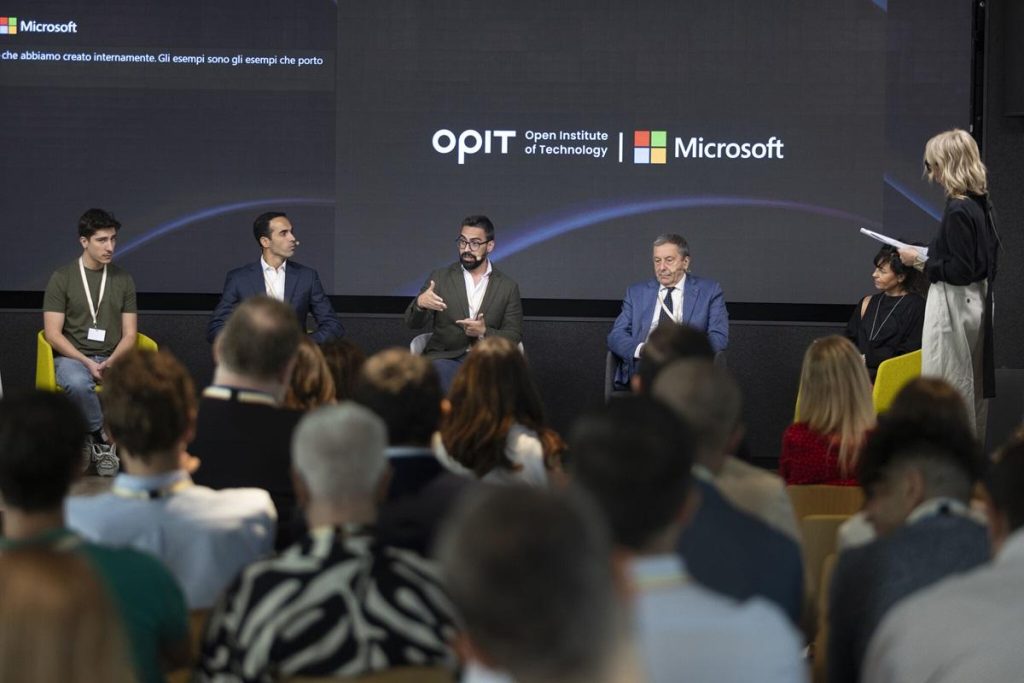
The gathering brought together academics and technology leaders from prominent European Institutions, such as Instituto de Empresa (IE University), OPIT itself and the Royal College of Arts, to explore how artificial intelligence is reshaping the university experience.
The OPIT AI Copilot has been trained on the institute’s complete academic archive, a collection created over the past three years that includes 131 courses, more than 3,500 hours of recorded lectures, 7,500 study resources, 320 certified assessments, and thousands of exercises and original learning documents.
Unlike generic AI tools, the Copilot is deeply integrated with OPIT’s learning management system, allowing it to track each student’s progress and provide tailored support.
This integration means the assistant can reference relevant sources within the learning environment, adapt to the student’s stage of study, and ensure that unreleased course content remains inaccessible.
A mobile app is also scheduled for release this autumn, that will allow students to download exercise and access other tools.
During examinations, the Copilot automatically switches to what the institute calls an “anti-cheating mode”, restricting itself to general research support rather than providing direct answers.
For OPIT’s international community of 500 students from nearly 100 countries, many of whom balance studies with full-time work, the ability to access personalised assistance at any time of day is a key advantage.
“Eighty-five per cent of students are already using large language models in some way to study,” said OPIT founder and director Riccardo Ocleppo. “We wanted to go further by creating a solution tailored to our own community, reflecting the real experiences of remote learners and working professionals.”
Tool aims to cut correction time by 30%
The Copilot will also reduce administrative burdens for faculty. It can help grade assignments, generate new educational materials, and create rubrics that allow teachers to cut correction time by as much as 30 per cent.
According to OPIT, this will free up staff to dedicate more time to teaching and direct student engagement.
At the Milan event, Rector Francesco Profumo underlined the broader implications of AI in higher education. “We are in the midst of a deep transformation, where AI is no longer just a tool: it is an environment that radically changes how we learn, teach, and create,” he said.
“But it is not a shortcut. It is a cultural, ethical, and pedagogical challenge, and to meet it we must have the courage to rethink traditional models and build bridges between human and artificial intelligence.”
OPIT was joined on stage by representatives from other leading institutions, including Danielle Barrios O’Neill of the Royal College of Art, who spoke about the role of AI in art and creativity, and Francisco Machin of IE University, who discussed applications in business and management education.
OPIT student Asya Mantovani, also employed at a leading technology and consulting firm in Italy, gave a first-hand account of balancing professional life with online study.
The assistant has been in development for the past eight months, involving a team of OPIT professors, researchers, and engineers.
Ocleppo stressed that OPIT intends to make its AI innovations available beyond its own institution. “We want to put technology at the service of higher education,” he said.
“Our goal is to develop solutions not only for our own students, but also to share with global institutions eager to innovate the learning experience in a future that is approaching very quickly.”





Have questions?
Visit our FAQ page or get in touch with us!

Write us at +39 335 576 0263

Get in touch at hello@opit.com

Talk to one of our Study Advisors

We are international
We can speak in:


