

Times of Malta: Malta-based OPIT launches innovative AI tool for students, academic staff
Source:
- Times of Malta, published on September 18th, 2025
4 min read
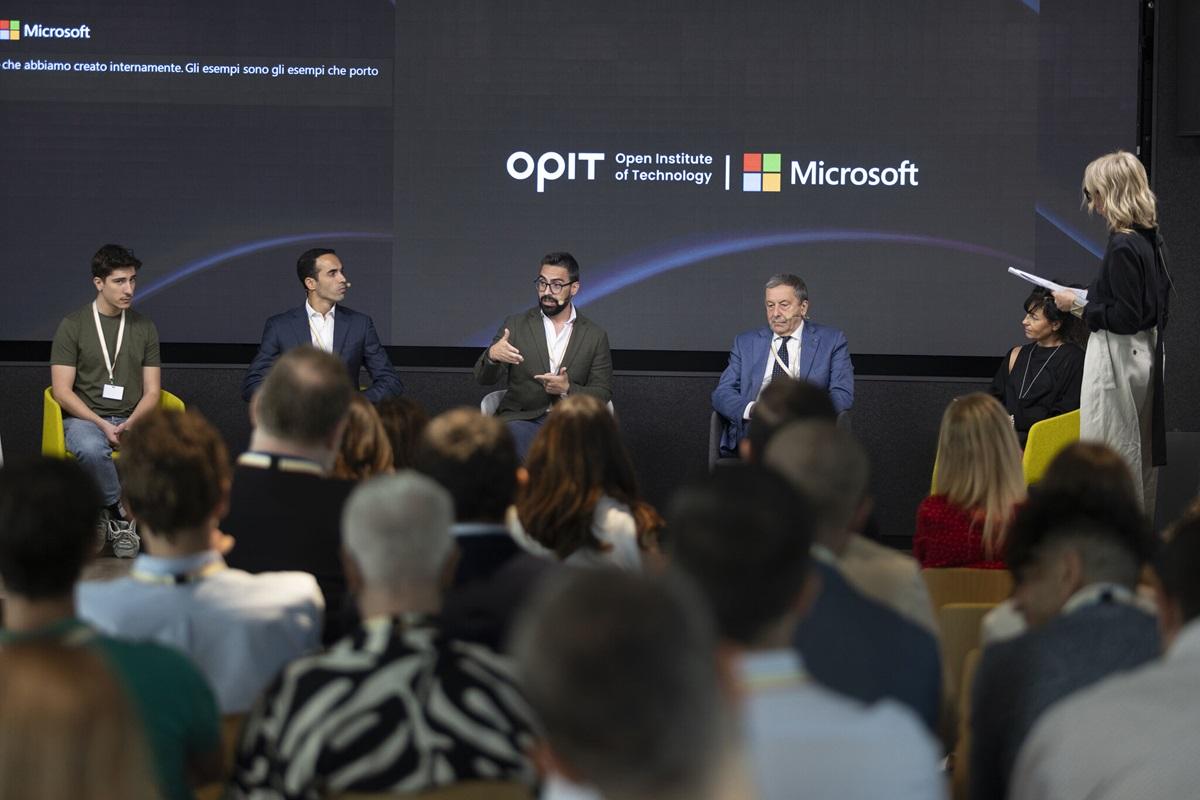
The gathering brought together academics and technology leaders from prominent European Institutions, such as Instituto de Empresa (IE University), OPIT itself and the Royal College of Arts, to explore how artificial intelligence is reshaping the university experience.
The OPIT AI Copilot has been trained on the institute’s complete academic archive, a collection created over the past three years that includes 131 courses, more than 3,500 hours of recorded lectures, 7,500 study resources, 320 certified assessments, and thousands of exercises and original learning documents.
Unlike generic AI tools, the Copilot is deeply integrated with OPIT’s learning management system, allowing it to track each student’s progress and provide tailored support.
This integration means the assistant can reference relevant sources within the learning environment, adapt to the student’s stage of study, and ensure that unreleased course content remains inaccessible.
A mobile app is also scheduled for release this autumn, that will allow students to download exercise and access other tools.
During examinations, the Copilot automatically switches to what the institute calls an “anti-cheating mode”, restricting itself to general research support rather than providing direct answers.
For OPIT’s international community of 500 students from nearly 100 countries, many of whom balance studies with full-time work, the ability to access personalised assistance at any time of day is a key advantage.
“Eighty-five per cent of students are already using large language models in some way to study,” said OPIT founder and director Riccardo Ocleppo. “We wanted to go further by creating a solution tailored to our own community, reflecting the real experiences of remote learners and working professionals.”
Tool aims to cut correction time by 30%
The Copilot will also reduce administrative burdens for faculty. It can help grade assignments, generate new educational materials, and create rubrics that allow teachers to cut correction time by as much as 30 per cent.
According to OPIT, this will free up staff to dedicate more time to teaching and direct student engagement.
At the Milan event, Rector Francesco Profumo underlined the broader implications of AI in higher education. “We are in the midst of a deep transformation, where AI is no longer just a tool: it is an environment that radically changes how we learn, teach, and create,” he said.
“But it is not a shortcut. It is a cultural, ethical, and pedagogical challenge, and to meet it we must have the courage to rethink traditional models and build bridges between human and artificial intelligence.”
OPIT was joined on stage by representatives from other leading institutions, including Danielle Barrios O’Neill of the Royal College of Art, who spoke about the role of AI in art and creativity, and Francisco Machin of IE University, who discussed applications in business and management education.
OPIT student Asya Mantovani, also employed at a leading technology and consulting firm in Italy, gave a first-hand account of balancing professional life with online study.
The assistant has been in development for the past eight months, involving a team of OPIT professors, researchers, and engineers.
Ocleppo stressed that OPIT intends to make its AI innovations available beyond its own institution. “We want to put technology at the service of higher education,” he said.
“Our goal is to develop solutions not only for our own students, but also to share with global institutions eager to innovate the learning experience in a future that is approaching very quickly.”